 RANTHAMBORE
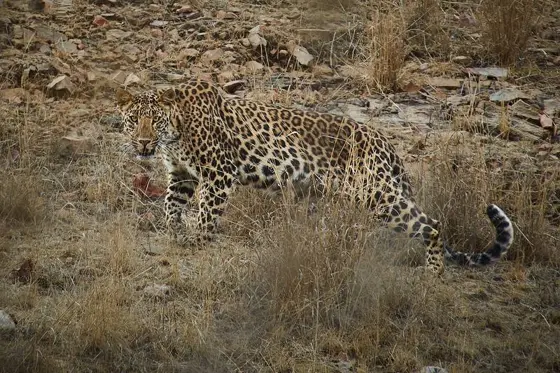
Indian leopard in Ranthambore
Indian leopard (Panthera pardus fusca): Rocky hills, cliffs and the edges of the park, where tigers are fewer.
Ranthambore Tiger books safari permits in your name — we are not the Rajasthan Forest Department and not the official park booking website.
Check availability for your date
Check my date on WhatsApp →Reply in 2 min · 7am–10pm · pay only after we confirm
Prefer to pay online now? Book & pay online →
Phone optional here · we reply by email, usually within the hour (7am–10pm)
In one line: Indian leopard (Panthera pardus fusca) — IUCN Red List: Vulnerable. Rocky hills, cliffs and the edges of the park, where tigers are fewer.
| Scientific name | Panthera pardus fusca |
| IUCN status (global) | Vulnerable |
| Legal protection in India | Schedule I; widespread but persecuted outside protected areas. |
| Where our guides see it most | zone 1 (Singh Dwar and Sultanpur), zone 5 (Kachida valley and Bakaula), zone 2 (Phuta Kot and the waterholes) |
“Where our guides see it most” is a habitat pattern from our own safaris in recent seasons, not a live location. Content checked 4 November 2026.
Identification
Smaller and more lightly built than a tiger, with rosettes instead of stripes; about 50–70 kg.
Habitat in Ranthambore
Rocky hills, cliffs and the edges of the park, where tigers are fewer.
Got a date in mind? Send it on WhatsApp. We check live seats and reply in minutes, 7am–10pm.
Check my date on WhatsAppBehaviour
Mostly nocturnal, climbs trees to cache kills; avoids tigers by keeping to broken ground.
When to look
Dawn and dusk on the rocky routes (zones 1 and 5) and around the fort; winter mornings are good.
Worth knowing
Seen more often on the rocky zone 1 and zone 5 routes and near the fort than at the lakes.
Sold out online? Ask us. We book from the daily current and tatkal quotas, and you pay only after we confirm availability, with a full refund if the permit can’t be issued.
Check my date on WhatsAppPhotography
They sit on rock ledges: scan the cliffs with binoculars before raising the camera.
Conservation
Schedule I; widespread but persecuted outside protected areas. Status is the IUCN Red List global category; it describes the species worldwide, not the Ranthambore population.
Questions
Are leopards common in Ranthambore?
They are present throughout but seen far less than tigers, because they avoid tiger country and keep to the rocks and the fringes.
Other wildlife of Ranthambore
Bengal tiger · Sloth bear · Striped hyena · Golden jackal · Mugger (marsh crocodile) · Sambar deer · Chital (spotted deer) · Nilgai (blue bull) · Wild boar · Chinkara (Indian gazelle) · Hanuman langur · Red-headed vulture · Indian peafowl · Caracal
Dated sightings archive
Verified entries for this species from our sightings archive: dated, zone-level, sourced. Not a live position.
Loading the archive…
Sources and how we know
Species facts follow standard references (IUCN Red List, the Wildlife Institute of India and NTCA status reports). “Where our guides see it most” is our drivers’ own experience from recent seasons: a habitat pattern, never a live location or a promise.
- Research IUCN Red List of Threatened Species (global categories)
- Research Status of Tigers in India 2022: summary report (NTCA and Wildlife Institute of India)
- Official National Tiger Conservation Authority (NTCA), Government of India
- Official Rajasthan Forest Department
Spotted an error? Tell us and we correct it: see our editorial and corrections policy.