Core zones reopened on 1 October. Here is what every month until 30 June brings, for sightings, weather, crowds and prices.
Ranthambore Tiger books safari permits in your name — we are not the Rajasthan Forest Department and not the official park booking website.
Reply in 2 min · 7am–10pm · pay only after we confirm
Phone optional here · we reply by email, usually within the hour (7am–10pm)
The core zones of Ranthambore reopened on 1 October 2026 and stay open until 30 June 2027. Within that window the park changes completely: green and dense in October, cold and golden by January, bare and baking by May, when the tigers come to the water and are easiest to see. This is the long version of our month-by-month summary: what each month is actually like, who it suits, and how far ahead you need to book.
Late October to mid-March. Pleasant days, cool mornings, a green-to-golden forest and the best birdlife. The trade-off is demand: this is when permits sell out first.
April and May. The dhok forest drops its leaves, waterholes shrink, and tigers spend the hot hours near the lakes. Sightings are the best of the year, if you can take 40°C afternoons.
October, March, and July to September in the buffer zones. Easier permits, lower hotel rates and an emptier park. Core zones 1–5 are closed in the monsoon months.
| Month | Typical temperatures | Forest and sightings | Crowds and booking |
|---|---|---|---|
| October | 20–34°C | Still green and dense after the rains; animals dispersed, sightings fair to good | Moderate; book 1–2 weeks ahead, longer for Diwali |
| November | 13–30°C | Cover thinning, cool mornings, migratory birds arriving | Peak begins; Diwali is 8 November 2026 |
| December | 8–25°C | Cold, misty dawns; golden light; good sightings | Peak; Christmas–New Year sells out 6–8 weeks ahead |
| January | 7–23°C | Coldest mornings of the year; superb for birds; tigers active longer into the day | Peak; weekends 4–6 weeks ahead |
| February | 10–27°C | Warming, forest drying, sightings improving | Peak easing; still book 3–4 weeks ahead |
| March | 15–33°C | Very good; leaves falling, animals gathering near water | Busy around Holi, then easing |
| April | 22–39°C | Excellent; bare forest, tigers at lakes and waterholes | Lower demand; permits 1–2 weeks ahead |
| May | 27–42°C | The best sightings of the year; brutal afternoons | Low demand; the photographers' month |
| June | 29–41°C | Very good until the first rains; core zones close 30 June | Low demand |
| July–September | 25–35°C, humid | Monsoon; zones 1–5 closed, zones 6–10 open with fair sightings in a lush park | Lowest prices and the quietest park |
October is the month people underrate. The core zones have just reopened, the forest is still green from the monsoon and the lakes are full. Sightings are a little harder because the cover is thick and water is everywhere, but the park is beautiful, the weather is kind and permits are not yet a fight. Diwali falls on 8 November 2026 this season, so the last week of October and the first of November fill up early.
November is when the classic Ranthambore arrives: cool mornings, warm days, migratory birds on Padam Talao and Rajbagh, and thinning cover. From here until February every weekend sells out first.
December brings cold, misty dawns, sometimes close to 5°C in the open gypsy, and the most photogenic light of the year. The Christmas to New Year week is the busiest of the whole season; gypsy seats in core zones go six to eight weeks ahead, and hotels follow.

Got a date in mind? Send it on WhatsApp. We check live seats and reply in minutes, 7am–10pm.
Check my date on WhatsAppJanuary has the coldest mornings of the year. Carry a proper jacket, a cap and gloves for the morning drive; by 9 am you will be taking them off. Birdlife is at its peak, and because the days stay cool, tigers keep moving later into the morning than they do in summer.
February is many regulars' favourite month: still comfortable, the forest drying and opening up, and sightings climbing. Demand eases slightly after Republic Day but weekends still need three to four weeks' notice.
March is the turning point. Days warm up, the dhok trees start dropping leaves, and animals begin to concentrate near water. Holi week in the second half of March 2027 is busy; the rest of the month is good value for very good sightings.
If seeing a tiger matters more to you than comfort, this is your window. The forest is bare, the small waterholes have dried, and the big cats spend the hot hours at the lakes and the remaining water. April is hot but workable; May is the single best month for sightings and also the hardest on the body, with afternoons above 40°C. June stays excellent until the first storms, and the core zones close on 30 June.
In summer the morning drive leaves around 6 am and is pleasant until about 8:30; the afternoon drive is hot at the start but the last hour, as the light goes soft and the animals come down to drink, is why photographers come. Carry two litres of water per person, a hat, sunscreen and a scarf for the dust; the open vehicles have no shade.
Demand is low, so permits are usually available one to two weeks ahead and hotels discount heavily. Families with small children should think hard about the heat; photographers and serious wildlife watchers should think about nothing else.
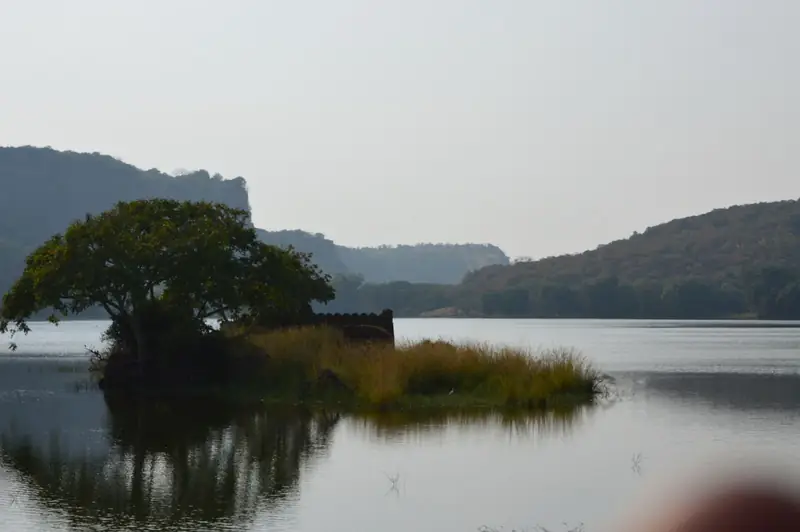
Zones 1 to 5 close for the rains. Zones 6 to 10 stay open, and they are not a consolation prize: Zone 6 (Kundal) and Zone 10 (Aantri) have resident tigers and produce regular sightings, and the park in the monsoon is lush, dramatic and almost empty. Expect humidity, sudden downpours and some drives cancelled by weather, with refunds following the Forest Department's rules. Prices for stays are the lowest of the year.
Sold out online? Ask us. We book from the daily current and tatkal quotas, and you pay only after we confirm availability, with a full refund if the permit can’t be issued.
Check my date on WhatsAppIn winter the afternoon drive is warmer and often the easier one for families; the morning is colder but misty and atmospheric, and sightings are usually better as animals are active after the night. In summer the morning is far more comfortable, but the last hour of the afternoon, when the heat finally breaks, is when the lakes come alive. If you are doing two drives, take one of each.
Timings shift with the season and are set by the Forest Department:
1–31 Oct: 6:30–10:00 am & 2:30–6:00 pm
1 Nov–31 Jan: 7:00–10:30 am & 2:00–5:30 pm
1 Feb–31 Mar: 6:30–10:00 am & 2:30–6:00 pm
1 Apr–15 May: 6:00–9:30 am & 3:00–6:30 pm
16 May–30 Jun: 6:00–9:30 am & 3:30–7:00 pm
Reporting is about 30 minutes before the drive. Zones 1–5 closed July–September.
Mid-November to early March. Comfortable weather, good sightings, the fort and the lakes at their best. Book the moment your dates are fixed; permits are the constraint, not hotels.
October, February or March. Mild weather, no extreme cold or heat, and shorter waits for permits than the December holidays. Choose the afternoon drive in winter.
April and May for tigers at water in bare forest; December and January for mist, golden light and birds. Consider a private gypsy so the vehicle waits where you want it.
November to February, when migratory ducks, waders and raptors join the resident species on Padam Talao, Rajbagh and Malik Talao.
July to September in the buffer zones, or October and late March in the core. Lower stay prices and easy permits; see our stay + safari packages.
December to February works; it just needs notice. Weekdays are easier than weekends, and a canter seat is easier to get than a gypsy seat at short notice.
How booking and permits work → · Add Ranthambore Fort between drives → · The tigers you might meet →
April and May. The forest is bare and the water scarce, so tigers spend the hot hours at the lakes and waterholes, where they are easy to find. The price is the heat: afternoons above 40°C.
Partly. Zones 1 to 5 close from 1 July to 30 September; zones 6 to 10 stay open all year and have regular sightings. The park is lush and quiet, and stay prices are the lowest of the year.
For the Christmas to New Year week, six to eight weeks ahead for gypsy seats in core zones. For other December dates, three to five weeks. Canter seats and buffer-zone permits are easier at shorter notice.
Yes, and it is underrated. The core zones have just reopened, the forest is green, the weather is pleasant and permits are easier than in winter. Sightings are a little harder because of the thick cover and plentiful water.
Mornings are colder but usually better for sightings and atmosphere; afternoons are warmer and easier with children. If you are doing two drives, take one of each.
Send your dates and group size on WhatsApp. We check live availability for your zone and shift and reply with an honest answer and an all-in price.
Check my dates on WhatsApp RANTHAMBORE