 RANTHAMBORE
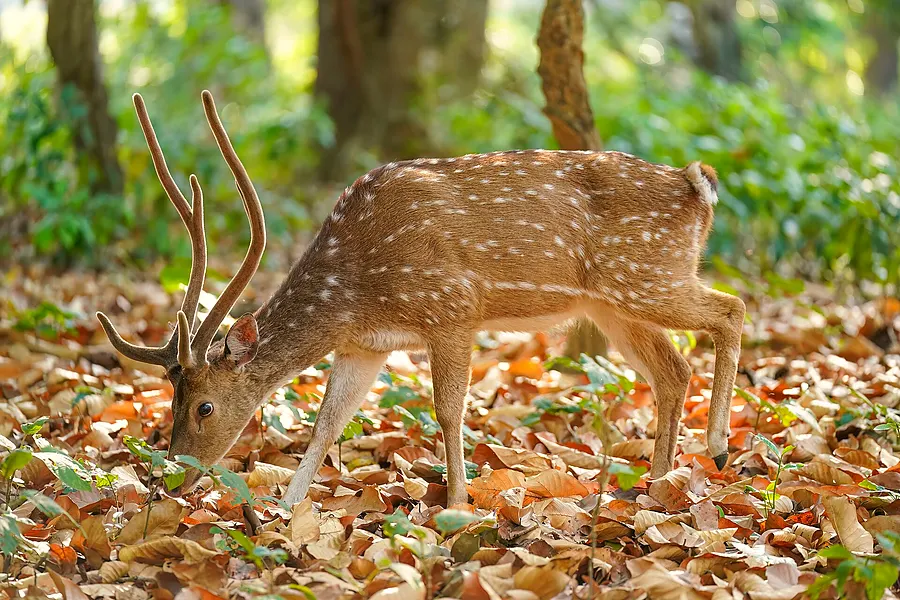
Chital (spotted deer) in Ranthambore
Chital (spotted deer) (Axis axis): Open forest and grassland throughout the park.
Ranthambore Tiger books safari permits in your name — we are not the Rajasthan Forest Department and not the official park booking website.
Check availability for your date
Check my date on WhatsApp →Reply in 2 min · 7am–10pm · pay only after we confirm
Prefer to pay online now? Book & pay online →
Phone optional here · we reply by email, usually within the hour (7am–10pm)
In one line: Chital (spotted deer) (Axis axis) — IUCN Red List: Least Concern. Open forest and grassland throughout the park.
| Scientific name | Axis axis |
| IUCN status (global) | Least Concern |
| Legal protection in India | Schedule III. |
| Where our guides see it most | zone 1 (Singh Dwar and Sultanpur), zone 2 (Phuta Kot and the waterholes), zone 3 (Padam Talao and Rajbagh), zone 6 (Kundal) |
“Where our guides see it most” is a habitat pattern from our own safaris in recent seasons, not a live location. Content checked 4 November 2026.
Identification
Rufous coat with white spots kept for life; stags with lyre-shaped antlers; 50–75 kg.
Habitat in Ranthambore
Open forest and grassland throughout the park.
Got a date in mind? Send it on WhatsApp. We check live seats and reply in minutes, 7am–10pm.
Check my date on WhatsAppBehaviour
Herds feed under langur troops, which drop fruit and give alarm calls; a chital alarm often precedes a tiger sighting.
When to look
Every drive, in herds under langur troops.
Worth knowing
The spotted coat is kept for life, unlike most deer.
Sold out online? Ask us. We book from the daily current and tatkal quotas, and you pay only after we confirm availability, with a full refund if the permit can’t be issued.
Check my date on WhatsAppPhotography
Herds at the waterholes in the afternoon light.
Conservation
Schedule III. Status is the IUCN Red List global category; it describes the species worldwide, not the Ranthambore population.
Other wildlife of Ranthambore
Bengal tiger · Indian leopard · Sloth bear · Striped hyena · Golden jackal · Mugger (marsh crocodile) · Sambar deer · Nilgai (blue bull) · Wild boar · Chinkara (Indian gazelle) · Hanuman langur · Red-headed vulture · Indian peafowl · Caracal
Dated sightings archive
Verified entries for this species from our sightings archive: dated, zone-level, sourced. Not a live position.
Loading the archive…
Sources and how we know
Species facts follow standard references (IUCN Red List, the Wildlife Institute of India and NTCA status reports). “Where our guides see it most” is our drivers’ own experience from recent seasons: a habitat pattern, never a live location or a promise.
- Research IUCN Red List of Threatened Species (global categories)
- Research Status of Tigers in India 2022: summary report (NTCA and Wildlife Institute of India)
- Official National Tiger Conservation Authority (NTCA), Government of India
- Official Rajasthan Forest Department
Spotted an error? Tell us and we correct it: see our editorial and corrections policy.