 RANTHAMBORE
Ranthambore National Park: a complete visitor guide
Where the park is, what lives there, how the ten safari zones work, when to come and how to book. Each section links to our detailed guide.
Ranthambore Tiger books safari permits in your name — we are not the Rajasthan Forest Department and not the official park booking website.
Check availability for your date
Check my date on WhatsApp →Reply in 2 min · 7am–10pm · pay only after we confirm
Prefer to pay online now? Book & pay online →
Phone optional here · we reply by email, usually within the hour (7am–10pm)
In short: Ranthambore National Park is a tiger reserve in Sawai Madhopur district, Rajasthan, about 160–180 km from Jaipur. It is known for dry forest, three lakes, a 10th-century hill fort inside the park, and about 70 tigers including cubs. Visitors enter on guided safaris in a gypsy or canter, in two shifts a day, with a Forest Department permit.
Ranthambore at a glance
| Question | Answer |
|---|---|
| Where is it | Sawai Madhopur district, Rajasthan. The town and railway station are Sawai Madhopur; the park gates are 10–13 km on |
| Size | The national park is just under 400 sq km. The wider tiger reserve is about 1,334 sq km, including the Kailadevi and Sawai Man Singh sanctuaries |
| Status | Game sanctuary from 1955, a Project Tiger reserve from 1973–74, a national park from 1980 |
| Landscape | Dry deciduous forest of dhonk trees, rocky hills and cliffs, between the Banas and Chambal rivers |
| Tigers | About 70 including cubs. Forest Department estimates vary from year to year |
| Safari zones | Ten. Zones 1–5 are the core around the lakes and fort; zones 6–10 are the outer zones |
| Safari shifts | Morning and afternoon, about 3 to 3.5 hours each, with gate times that move by season |
| Closed | Zones 1–5 do not run on Wednesdays or from 1 July to 30 September; zones 6–10 do not run on Tuesdays |
Facts last checked 5 November 2026. Rules, closures and fees are set by the Rajasthan Forest Department and can change. Ranthambore Tiger is a private booking service, not the park authority.
The safari zones
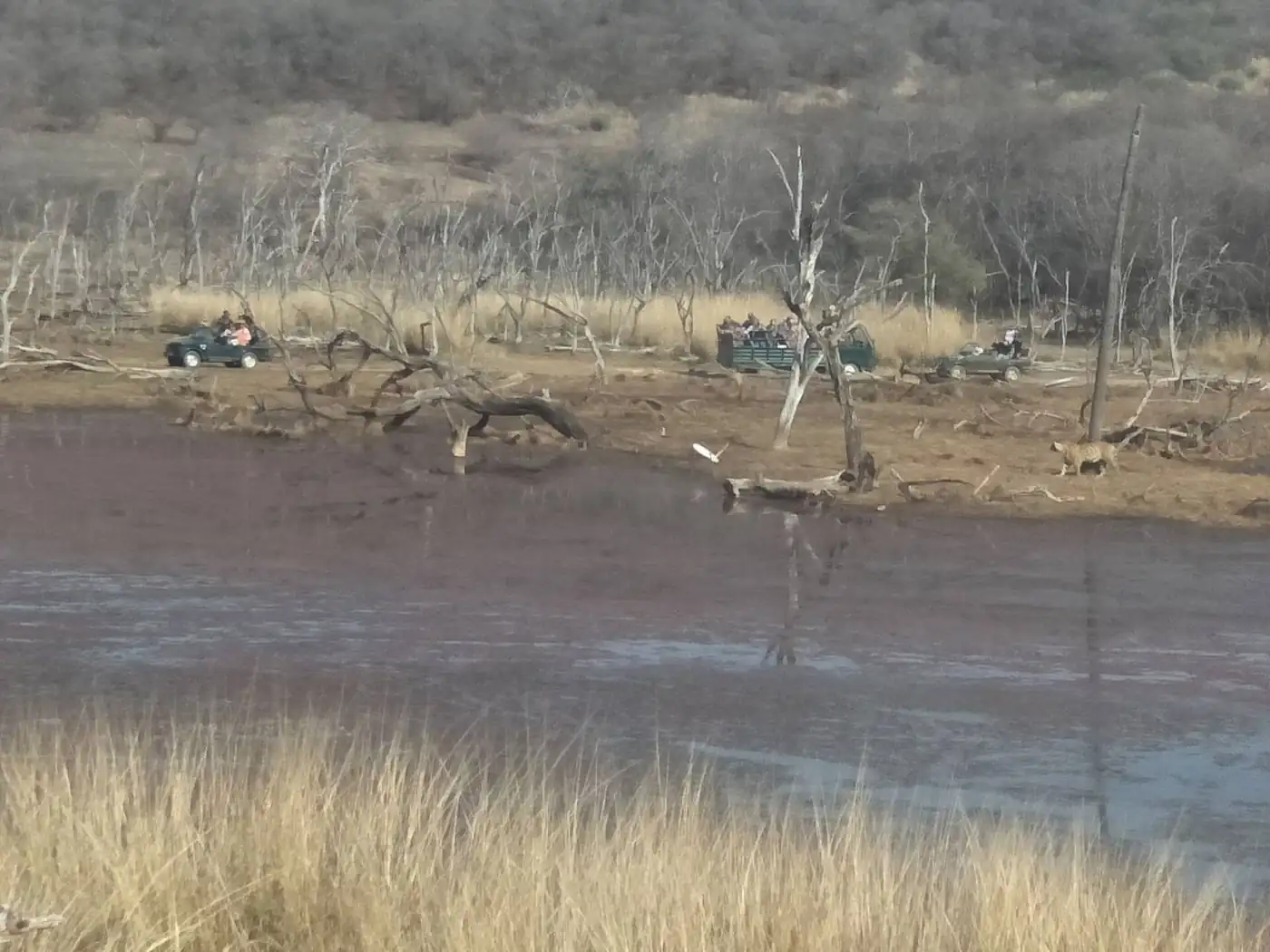
The park is divided into ten zones, and each safari stays in the zone on your permit. Zone 3 is the most requested because of Padam Talao and Rajbagh Talao, but there is no permanently best zone, because tigers move. The Forest Department allocates zones, so a preferred zone is a request and not a promise. Read the zone-by-zone guide or explore them on the 3D map of the park.
Got a date in mind? Send it on WhatsApp. We check live seats and reply in minutes, 7am–10pm.
Check my date on WhatsAppWildlife
Besides the Bengal tiger, the park holds leopard, sloth bear, striped hyena, sambar, chital, nilgai, chinkara, wild boar, langur and marsh crocodile, along with a rich bird list. No sighting is ever guaranteed, by us or by anyone. See the wildlife guide, the famous tigers of Ranthambore and an honest look at your chances of seeing a tiger.
Ranthambore Fort and the Ganesh temple
The fort stands on a rock inside the park and has been part of the UNESCO Hill Forts of Rajasthan since 2013. The Trinetra Ganesh temple inside it draws pilgrims from across India. You do not need a safari permit to visit either. Our fort and temple guide covers timings, the steps and how to fit it around a safari.
When to visit
The core zones open from 1 October to 30 June. October to March is cooler and the most popular; April to June is hot, with thinner cover and animals drawn to water. Our month-by-month guide compares weather and crowds, and the safari timings page lists gate times by month.
Sold out online? Ask us. We book from the daily current and tatkal quotas, and you pay only after we confirm availability, with a full refund if the permit can’t be issued.
Check my date on WhatsAppHow to reach Ranthambore
You travel to Sawai Madhopur Junction, on the Delhi–Mumbai main line. Jaipur is about 160–180 km away, roughly 3 to 3.5 hours by road or about 2 hours by train. Delhi is about 360–390 km, 4.5 to 6 hours by train. See every route, with distances and times.
Permits, prices and booking
Every visitor on safari needs a Forest Department permit in their own name, for a set date, shift and zone. You can apply on the department's portal yourself or book through a service like ours. See what a park ticket actually is, our safari prices, gypsy versus canter, the safari rules and our guide for foreign nationals. If the portal shows sold out, read what sold out really means.
Where to stay
Most hotels sit along Ranthambore Road or in the villages near the gates. Browse hotels in Ranthambore by budget or read where to stay.
Questions about Ranthambore National Park
Which state is Ranthambore National Park in?
Rajasthan, in Sawai Madhopur district, about 160–180 km from Jaipur.
Why is Ranthambore famous?
For wild tigers seen in an unusually open landscape of lakes and ruins, for the tigress Machli (T-16), and for the 10th-century fort inside the park.
How many tigers are in Ranthambore?
About 70 including cubs, across the core and surrounding areas. Forest Department estimates vary from year to year.
Is Ranthambore open all year?
Zones 1–5 are closed from 1 July to 30 September. Zones 6–10 can run through the monsoon, subject to Forest Department orders.
Can I enter Ranthambore National Park without a safari?
You can visit the fort and Trinetra Ganesh temple by the temple road without a safari permit. Going into the safari zones needs a permit and an authorised vehicle.