Four of India's best tiger reserves compared honestly: how to reach them, when they are open, how good the sightings are, and who each one suits.
Ranthambore Tiger books safari permits in your name — we are not the Rajasthan Forest Department and not the official park booking website.
Reply in 2 min · 7am–10pm · pay only after we confirm
Phone optional here · we reply by email, usually within the hour (7am–10pm)
Short answer: for a first tiger safari in India, and for anyone on a Delhi–Agra–Jaipur trip, Ranthambore is usually the best tiger reserve in India to choose: it is the easiest to reach, the dry open forest gives a good chance of a sighting, and the lakes, ruins and fort make it beautiful even on a quiet drive. Jim Corbett suits Delhi weekenders, birders and people who want to sleep inside the forest. Bandhavgarh is the choice for a dedicated tiger trip of three nights or more. Tadoba works best for travellers flying via Nagpur and for hot-season sightings.
Last checked 2 November 2026. Season and closure dates change from year to year; we say where you should confirm the current forest department notice before you book.
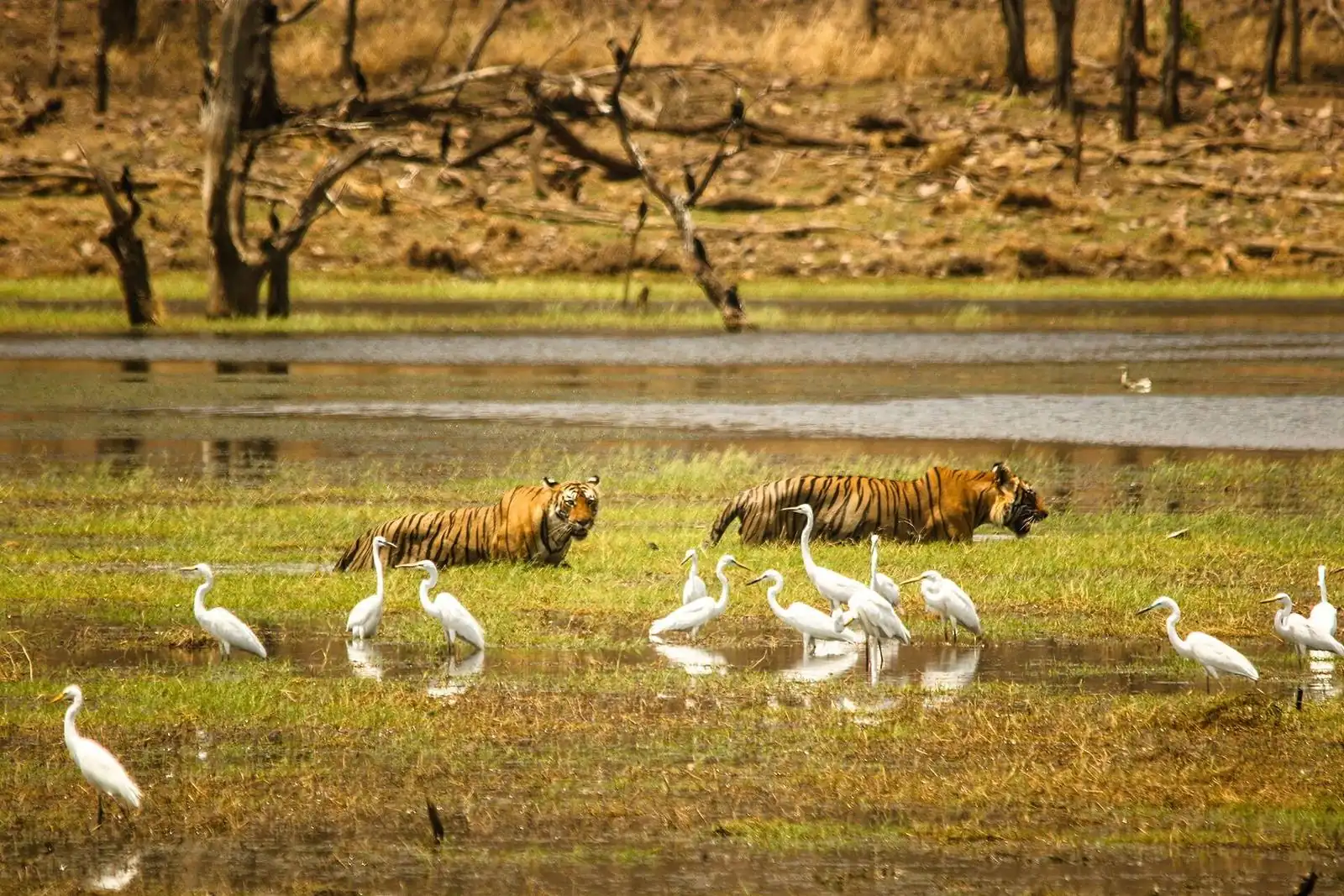
A tiger at one of Ranthambore's lakes. Photo: Zahirabbaswikiindia, CC BY-SA 4.0, Wikimedia Commons.
We book safaris in Ranthambore, so we are not neutral, and we will tell you plainly where the other parks do better. This guide compares the four reserves most often on the shortlist: what each is like, how you get there, when it is open, how hard it is to get a permit, and who each one suits. If you only remember one thing: India has no "best" tiger reserve, only the best one for your dates, your route and how many days you have.
| Ranthambore | Jim Corbett | Bandhavgarh | Tadoba-Andhari | |
|---|---|---|---|---|
| State | Rajasthan | Uttarakhand | Madhya Pradesh | Maharashtra |
| Gateway town | Sawai Madhopur | Ramnagar | Tala (Umaria district) | Moharli / Chandrapur |
| Nearest airport | Jaipur, about 3–3.5 hrs by road | Pantnagar (small); most people come by road from Delhi | Jabalpur, about 4–5 hrs by road | Nagpur, about 3 hrs by road |
| By train | Sawai Madhopur Jn, on the Delhi–Mumbai main line; 10–13 km to the gates | Ramnagar station, direct trains from Delhi | Umaria (about 35 km) or Katni | Chandrapur (about 45 km) |
| From Delhi | 4.5–6 hrs by direct train | 5–7 hrs by road | Overnight train, then road | Fly to Nagpur, then 3 hrs by road |
| From Mumbai | Overnight direct train | Fly to Delhi, then road | Train or flight to Jabalpur, then road | Fly to Nagpur, then road |
| Landscape | Dry deciduous forest, lakes, cliffs, ruins, a hill fort | Himalayan foothills, sal forest, grassland, the Ramganga river | Sal forest, meadows, hills around an old fort | Teak and bamboo forest, lakes |
| Tiger sighting reputation | Good, especially in the core zones and in the hot months | Variable; dense forest and tall grass hide tigers | Very good; known for a high tiger density | Very good, especially in April–May |
| Main season | Zones 1–5: 1 Oct–30 Jun. Zones 6–10: all year | Main zones roughly mid-Oct/mid-Nov to mid-June; Jhirna stays open all year | Core roughly mid-Oct to 30 Jun | Core roughly 1 Oct to 30 Jun; buffer all year |
| Weekly closure | Zones 1–5 Wednesday, zones 6–10 Tuesday | Varies by zone | Core zones: Wednesday afternoon | Core zones: Tuesday |
| Vehicles | 6-seat gypsy and 20-seat canter | Gypsy; canter on the Dhikala route | Gypsy | Gypsy |
| Getting a permit | Core zones sell out early; current and tatkal seats open close to the date | Dhikala stays sell out fast; day permits easier | Tala zone sells out early | Core gates sell out early on peak dates |
| Best for | First safari, short trips, Golden Triangle add-on, photographers | Delhi weekends, birders, a night inside the park | Serious tiger trips of 3+ nights | Summer sightings, travellers via Nagpur |
Closure dates for Corbett, Bandhavgarh and Tadoba are published each year by the Uttarakhand, Madhya Pradesh and Maharashtra forest departments and have shifted by a week or two between years. Treat the months above as a guide and confirm before booking.
Ranthambore is the reserve most first-time visitors to India see, and for good reason. Sawai Madhopur sits on the main Delhi–Mumbai railway line, so you can arrive by direct train from Delhi in 4.5 to 6 hours or from Jaipur in about 2, and the park gates are only 10 to 13 km from the station. No other well-known tiger reserve is this simple to reach without a car.
The forest is dry and fairly open, especially from February onwards when the leaves fall, and tigers here are used to vehicles. The core of the park, zones 1 to 5, is built around three lakes, Padam Talao, Rajbagh and Malik Talao, with the walls of Ranthambore Fort above them and old ruins in the forest. Even a drive without a tiger gives you crocodiles, sambar, birds and some of the most beautiful scenery in any Indian park.
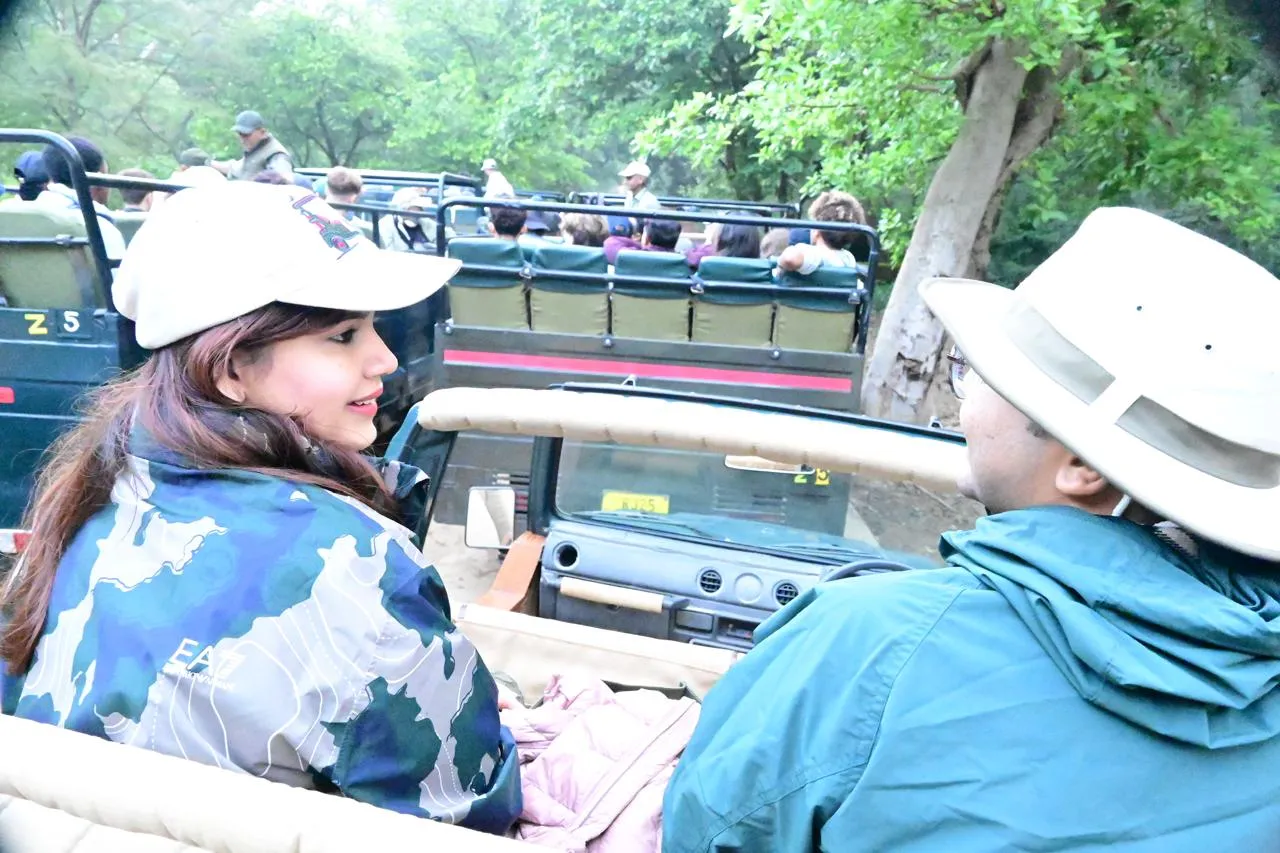
Our guests on a gypsy safari in Ranthambore.
The details: the ten zones explained, timings and closure days and your real chances of seeing a tiger.
Got a date in mind? Send it on WhatsApp. We check live seats and reply in minutes, 7am–10pm.
Check my date on WhatsAppCorbett, in the Himalayan foothills of Uttarakhand, was set up in 1936 as India's first national park. It is big and varied: sal forest, open grassland called chaur, the Ramganga river and its reservoir, and the hills behind. The 2022 national tiger estimate put more tigers in Corbett Tiger Reserve than in any other reserve in India.
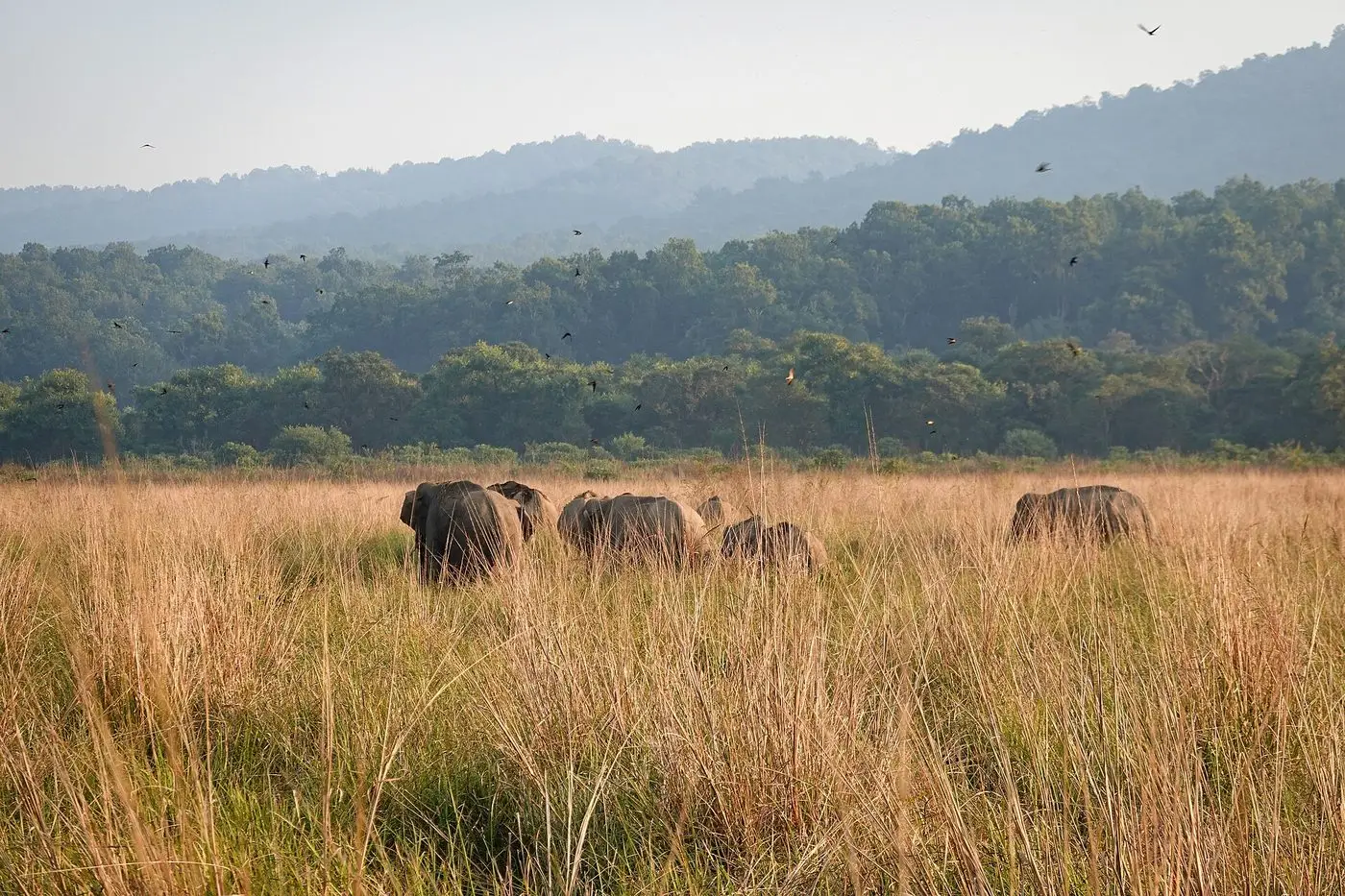
Elephants in the Dhikala grassland, Corbett Tiger Reserve. Photo: Timothy Gonsalves, CC BY-SA 4.0, Wikimedia Commons.
More tigers does not mean easier sightings. The forest is thick and the grass grows tall, so many drives end without a tiger even when the guide has seen fresh pugmarks. What Corbett gives you instead is variety: wild elephants, a huge list of birds, gharials and crocodiles in the Ramganga, and mornings of mist in the sal trees.
The park is split into tourism zones: Bijrani, Jhirna, Dhela, Dhikala, Durga Devi and Garjiya are the best known. Dhikala is the famous one, because you can stay overnight in the forest rest house inside the park. Those rooms sell out very quickly. Jhirna stays open through the monsoon; Dhikala, Bijrani and Durga Devi close for the rains and reopen between mid-October and mid-November.
Pick Corbett if you live in Delhi NCR and want a road trip, you care about birds and elephants as much as tigers, or you want the experience of a night inside a tiger reserve. Pick Ranthambore instead if a tiger sighting on a short trip is the priority, or if you are travelling by train.
Bandhavgarh, in Madhya Pradesh, is famous among wildlife photographers for its tiger density. Its three core zones, Tala, Magadhi and Khitauli, cover sal forest, bamboo, grassy meadows and rocky hills, with the ruins of Bandhavgarh Fort on a plateau at the centre. Tala is the zone everyone wants and the first to sell out.
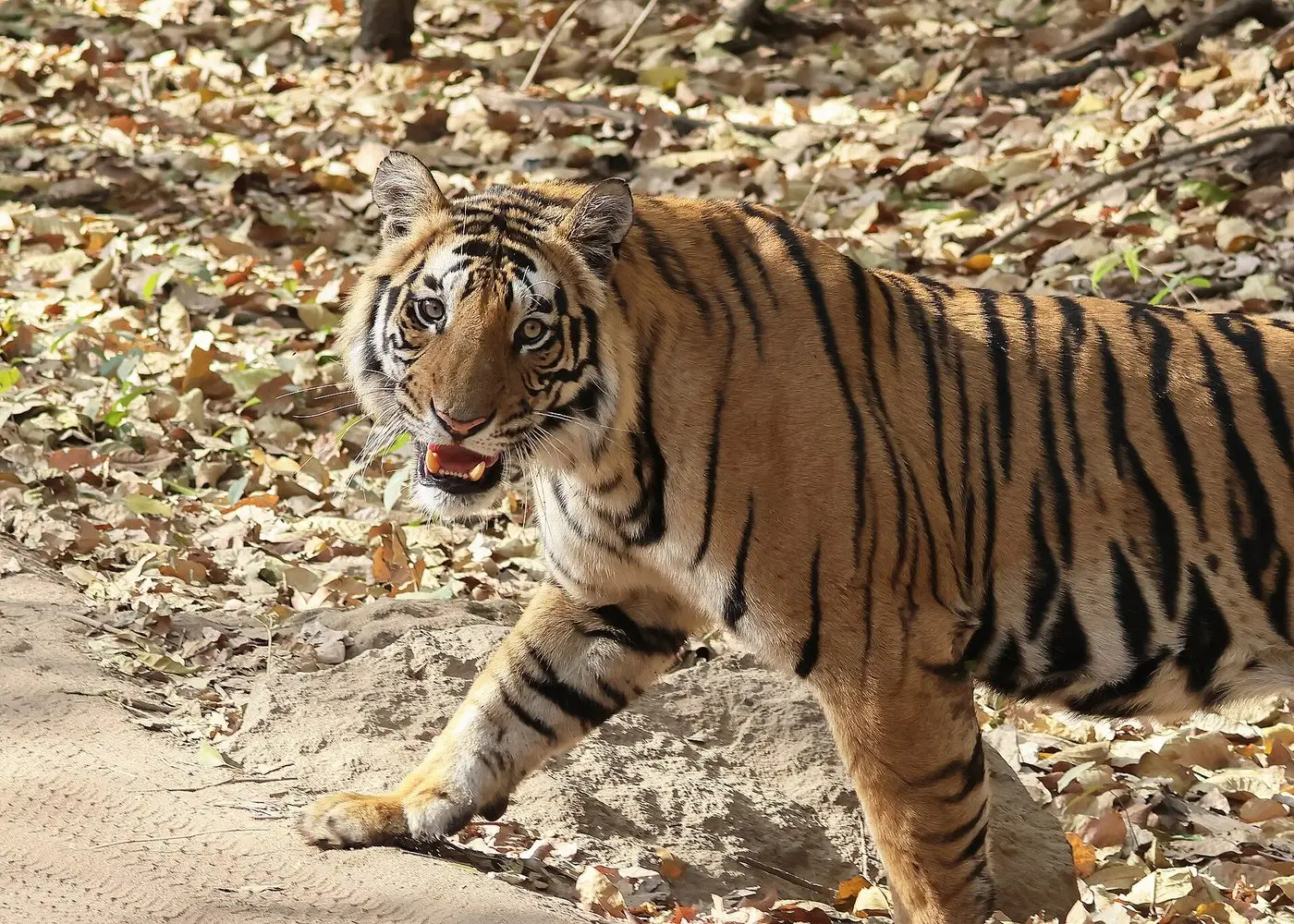
A tiger in Bandhavgarh National Park. Photo: Bernard Gagnon, CC BY 4.0, Wikimedia Commons.
The trade-off is distance. There is no quick way in: you take an overnight train to Umaria or Katni, or fly to Jabalpur and drive 4 to 5 hours. That makes Bandhavgarh worth it for a trip of three nights or more, often combined with Kanha, but hard to fit into a short holiday. Safaris are by gypsy only. The core zones close for the monsoon and, like other Madhya Pradesh reserves, do not run on Wednesday afternoons.
Pick Bandhavgarh if seeing tigers is the whole point of the trip and you have four or five days in central India. Pick Ranthambore instead if you have two or three days, or the safari is part of a wider Rajasthan or Golden Triangle trip.
Tadoba, in the Chandrapur district of Maharashtra, is the state's oldest national park and has become one of India's most reliable reserves for tiger sightings. The forest is teak and bamboo around Tadoba Lake, and in the hot months from April to June the tigers keep close to the few waterholes, which is when Tadoba is at its best.
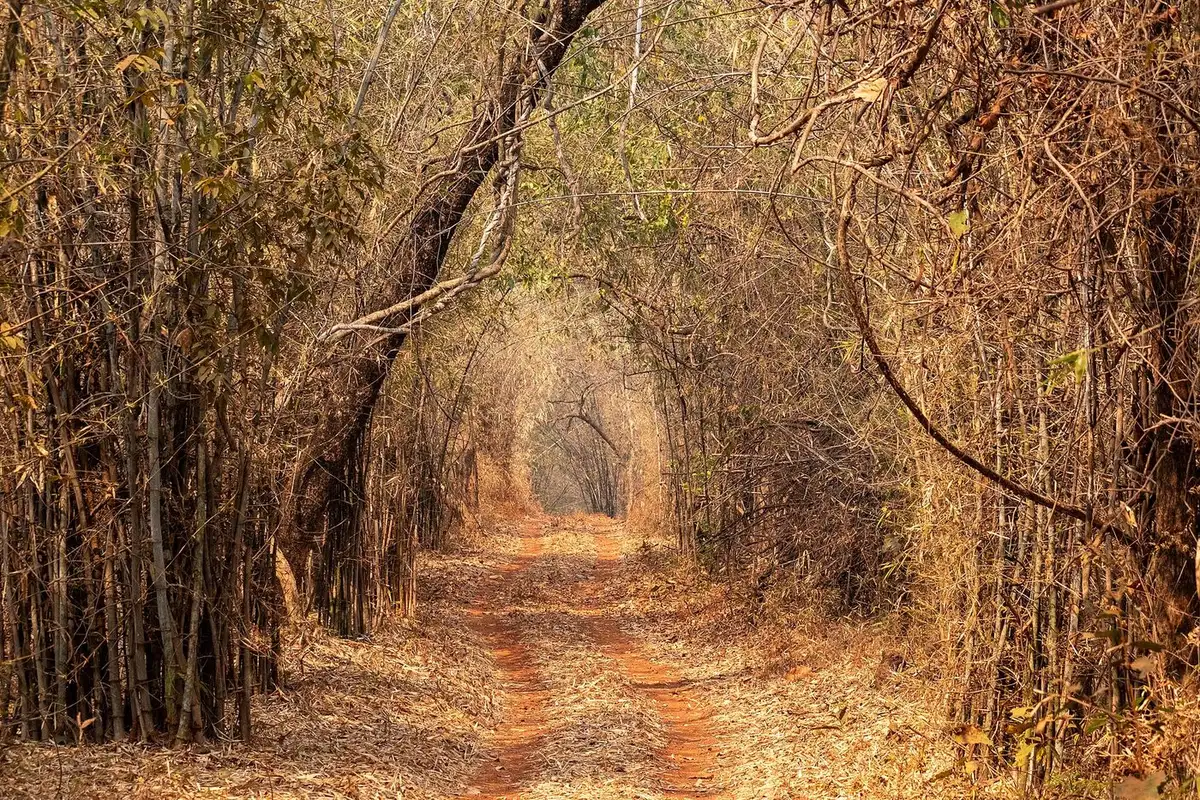
Bamboo forest in Tadoba-Andhari. Photo: Rohit Sharma, CC BY-SA 4.0, Wikimedia Commons.
Most visitors fly into Nagpur and drive about three hours to the Moharli side, or come by train to Chandrapur. That makes Tadoba the natural choice for people from Mumbai, Pune, Hyderabad or Bengaluru, and a long way round from Delhi or Rajasthan. The core zones close on Tuesdays and for the monsoon, roughly July to September, while buffer zones stay open through the rains. Safaris are by gypsy.
Pick Tadoba if you are flying via Nagpur, travelling in April or May, or coming from western or southern India. Pick Ranthambore instead if you are already in north India or on a Rajasthan route.
Sold out online? Ask us. We book from the daily current and tatkal quotas, and you pay only after we confirm availability, with a full refund if the permit can’t be issued.
Check my date on WhatsAppRanthambore. Easy to reach, good sighting chances for a short stay, and a beautiful forest even on a quiet drive.
Ranthambore. It sits between Agra and Jaipur and adds two nights without flights. See the itinerary below.
Corbett or Ranthambore. Corbett for birds and a night in the forest; Ranthambore for a better shot at a tiger. Our Delhi weekend plan has the trains and timings.
Bandhavgarh, or Bandhavgarh and Kanha together. Ranthambore is a strong second for its backdrops.
Tadoba or Ranthambore. Both are hot and both are excellent for sightings at water.
Most core zones are closed. Ranthambore zones 6–10, Corbett's Jhirna and Tadoba's buffer zones stay open, with fewer sightings.
Settled on Ranthambore? Send us your date and we check what is open: Ranthambore safari booking, with canter seats from ₹2,200 per person and the permit issued in your name.
The Golden Triangle of Delhi, Agra and Jaipur is where most first trips to India start, and Ranthambore is the only major tiger reserve that slots into it without a flight. Sawai Madhopur is on the railway between Delhi and Mumbai, about 2 hours by train from Jaipur, and roughly 5 to 6 hours by road from Agra.
| Day | A 7-day Golden Triangle with Ranthambore |
|---|---|
| 1–2 | Delhi |
| 3 | Agra: the Taj Mahal at sunrise, Agra Fort |
| 4 | Agra to Ranthambore by road (about 5–6 hrs); arrive the evening before your first drive |
| 5 | Morning and afternoon safaris, Ranthambore Fort in between if you like |
| 6 | Morning safari, then train to Jaipur (about 2 hrs) |
| 7 | Jaipur, then home via Jaipur or Delhi |
Doing the same with Corbett means a long road detour north of Delhi, and Bandhavgarh or Tadoba mean an internal flight and a long drive each way. If you have two weeks and tigers are a priority, central India is worth it; if you have a week, Ranthambore is the efficient choice.
Foreign nationals pay a higher permit fee at every Indian reserve. Through us, a canter seat for a foreign national is from ₹4,500 per person and a shared gypsy seat from ₹8,000 at short notice. Original passports are checked at the gate. Everything a foreign visitor needs is on our Ranthambore safari for foreign nationals page.
All four parks sell permits through state forest department portals, opening months ahead, and the best zones on weekends, Diwali, Christmas and New Year sell out within minutes of opening. Where they differ is what happens after the advance seats are gone.
Ranthambore has the most second chances. When the advance quota is sold out, as it is now for most dates until 31 January 2027, seats are still released close to the date:
| Ranthambore quota | When it opens | Our price from (Indian) |
|---|---|---|
| Current canter seat | 10 am the day before | ₹2,200 per person |
| Premium canter seat | 3 days before | ₹3,200 per person |
| Premium shared gypsy seat | 3 days before; full refund if not issued | ₹5,500 per person |
| Tatkal whole gypsy (6 seats) | 11 am, 7 days before; non-refundable once issued | ₹36,000 per vehicle |
| Advance quota, Feb–Mar 2027 | Opened 1 November | Canter ₹1,700, gypsy seat ₹2,500 |
Prices for zones 6–10; core zones 1–5 cost a little more. On festive dates (5–15 November, 20 December–2 January) a canter seat is a flat ₹3,500 and gypsy seats cost 20–30% more. Full grid on the Ranthambore safari price page.
The release calendar is on when Ranthambore seats open, and if your date shows sold out, read what sold out really means.
For seeing a tiger on a short trip, Ranthambore: the forest is more open and the tigers are used to vehicles. For birds, elephants, river scenery and a night inside the park at Dhikala, Corbett. From Delhi, Ranthambore is 4.5 to 6 hours by direct train and Corbett 5 to 7 hours by road.
Bandhavgarh, Tadoba and Ranthambore all have strong reputations, and the best one depends on the month and how long you stay. No park can promise a sighting. For a two or three day trip with easy access, Ranthambore is the practical choice; for a longer dedicated trip, Bandhavgarh.
Bandhavgarh is known for a higher tiger density and feels wilder, but it takes an overnight train or a flight plus a 4 to 5 hour drive to reach. Ranthambore is far easier to get to, has more varied scenery with lakes and a fort, and suits shorter trips.
Most core zones close from about July to September. Ranthambore zones 6 to 10 run all year, Corbett's Jhirna zone stays open, and Tadoba's buffer zones stay open, all with fewer sightings and some days lost to rain.
Corbett and Ranthambore are both about 5 to 7 hours from Delhi. Ranthambore has the advantage of direct trains to Sawai Madhopur, a short drive from the gates; Corbett is usually reached by road to Ramnagar.
Two nights and three drives is a sensible minimum in Ranthambore. For Bandhavgarh or Tadoba, plan three nights or more, because the travel takes longer and you will want more drives to make the journey worthwhile.
Tell us your date, the number of guests and whether you prefer a canter or a gypsy. We check the Forest Department portal, tell you what is open and the all-in price, and book the permit in your name. If the permit can't be issued you get a full refund, except tatkal, which is non-refundable once issued.
 RANTHAMBORE