November to February is Ranthambore's most comfortable season, with one catch: open-vehicle mornings are properly cold. Here is how to plan for it.
Ranthambore Tiger books safari permits in your name — we are not the Rajasthan Forest Department and not the official park booking website.
Reply in 2 min · 7am–10pm · pay only after we confirm
Phone optional here · we reply by email, usually within the hour (7am–10pm)
Short answer: Ranthambore in winter, November to February, means warm, sunny days and cold dawns. Typical temperatures in Sawai Madhopur run from about 13–30°C in November to 7–23°C in January, the coldest month. Safari vehicles are open, so the morning drive feels close to freezing in late December and January. Dress in layers with a warm jacket, cap and gloves. If you want comfort, take the afternoon drive; if you want mist and early light, take the morning one.
Last checked 2 November 2026. Temperatures are typical ranges for Sawai Madhopur; a given week can be warmer or colder. Safari timings are set by the Rajasthan Forest Department and printed on your permit.
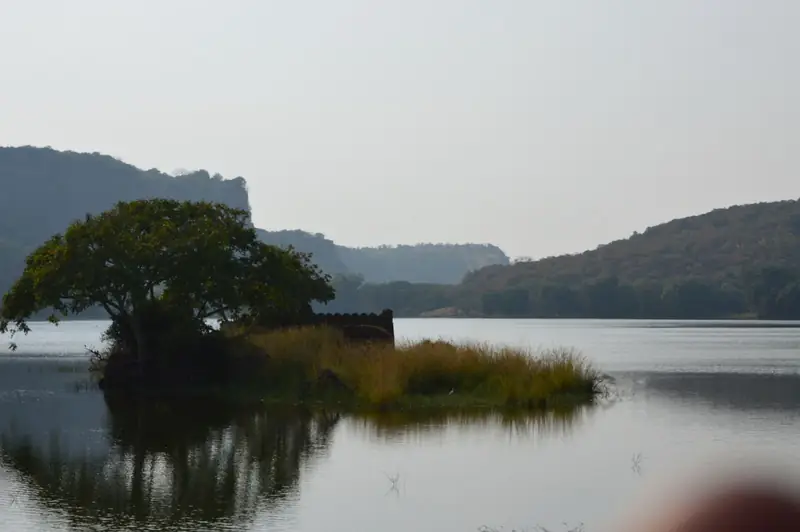
Padam Talao, the largest lake in the park's core. Photo: Subhayan Bhattacharyya, CC BY-SA 4.0, Wikimedia Commons.
Ranthambore sits in the dry east of Rajasthan. Winter here is clear and dry, with almost no rain, bright sun from mid-morning and big swings between day and night. The table shows what each winter month is usually like.
| Month | Typical temperature | Morning drive feels like | What the month is like |
|---|---|---|---|
| November | 13–30°C | Fresh, light jacket | The kindest month. Cool mornings, warm days, forest still fairly green, migratory birds arriving. Diwali week (5–15 November 2026) is busy. |
| December | 8–25°C | Cold; full jacket, cap, gloves | Misty, golden dawns. The last ten days, Christmas to New Year, are the busiest of the season. |
| January | 7–23°C | Very cold at 7 am in a moving open vehicle | The coldest month. Cold spells can bring dawn close to 3–5°C. Superb for birds; tigers often stay active later into the morning. |
| February | 10–27°C | Cool, warm by 9 am | Warming up, forest drying and opening, sightings improving. Many regulars' favourite month. |
Ranges are typical daily minimum to maximum for Sawai Madhopur, consistent with our month-by-month best time to visit guide. Online weather sites often show higher night-time lows than you will feel at dawn inside the forest.
Colder than you expect. Both the gypsy (a six-seat open jeep) and the canter (a 20-seat open bus) have no roof and no sides. You leave your hotel before sunrise, and the vehicle moves at 20–30 km an hour through the forest, so the wind chill is real. On a December or January morning, most of our guests say the first hour was the coldest they have been in India.
By about 9:30 the sun is up, the forest warms quickly, and the jacket comes off. The afternoon drive starts warm, in full sun, and only turns cold in the last 30–45 minutes as the light fades.
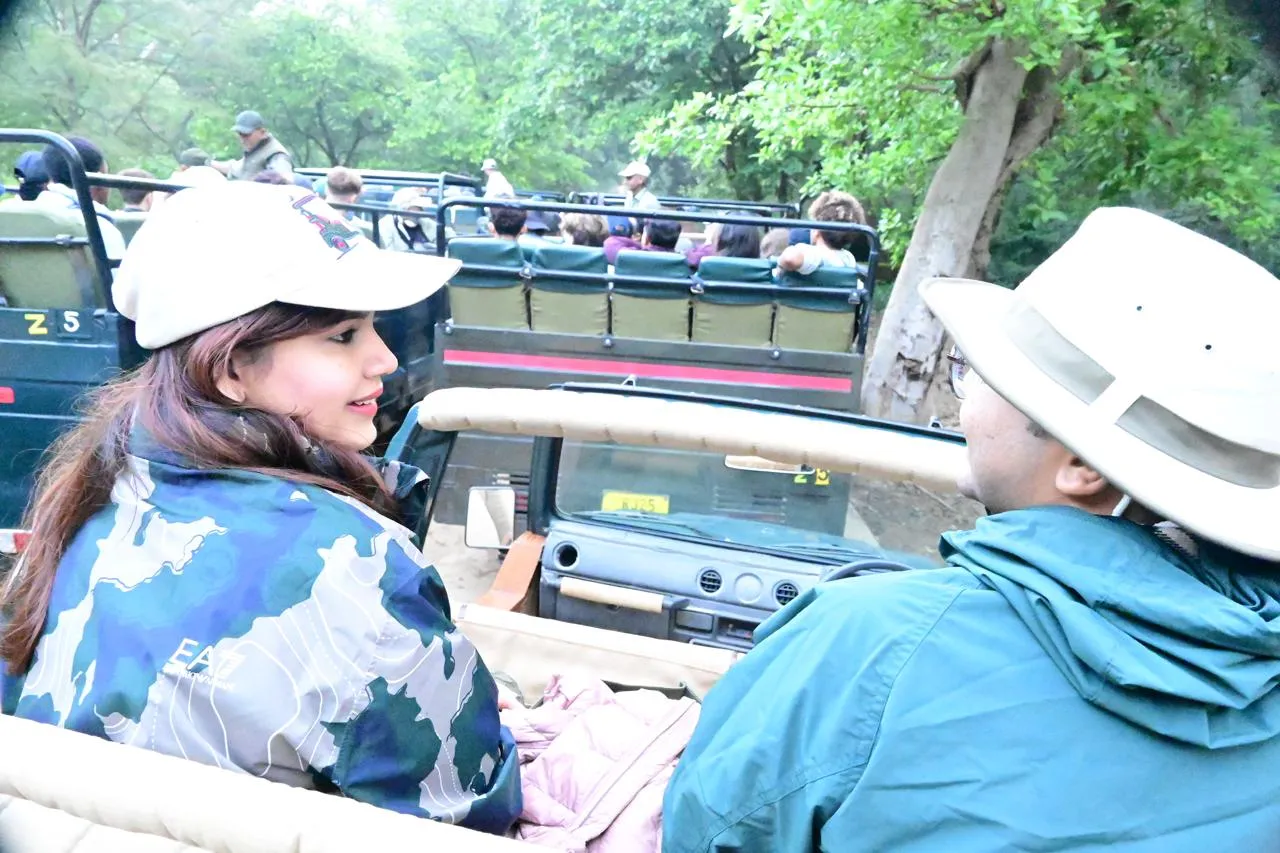
An open gypsy in Ranthambore: no roof, no sides. Photo: Ranthambore Tiger.
Got a date in mind? Send it on WhatsApp. We check live seats and reply in minutes, 7am–10pm.
Check my date on WhatsAppThermal inner layer, a fleece or sweater, a warm windproof jacket, a woollen cap that covers your ears, gloves, a scarf or buff, warm socks and closed shoes. Take layers off as the sun comes up.
Light layers, a jacket for the last hour, sunglasses, a cap, sunscreen and a scarf or mask for the dust on the forest tracks.
Original photo ID (the same one used on the permit; it is checked at the gate), water, binoculars, a camera with a fully charged battery (batteries drain faster in the cold), and earthy colours: green, brown, khaki.
Safari timings shift with the seasons, because the park follows daylight. In winter the morning drive starts later and the afternoon drive ends earlier. These are the usual times; the exact time is printed on your permit.
| Dates | Morning drive | Afternoon drive |
|---|---|---|
| 1 October – 31 October | about 6:30 – 10:00 am | about 2:30 – 6:00 pm |
| 1 November – 31 January | about 7:00 – 10:30 am | about 2:00 – 5:30 pm |
| 1 February – 31 March | about 6:30 – 10:00 am | about 2:30 – 6:00 pm |
Pickup from hotels on Ranthambore Road is usually 30–45 minutes before the gate time, so in December and January you are in the vehicle around 6:15 to 6:30 am, in the dark and the coldest part of the day. Core zones 1 to 5 don't run on Wednesdays, and zones 6 to 10 don't run on Tuesdays. More on Ranthambore safari timings and zones.
Planning a date? Send it to us on WhatsApp and we'll tell you which seats are open, or check this week's seat status on the Ranthambore safari booking page.
| Morning drive | Afternoon drive | |
|---|---|---|
| Comfort | Cold for the first 1–2 hours | Warm and sunny; cool in the last hour |
| Light and mood | Mist over the lakes, soft golden light, the most atmospheric drive of the year | Bright, then warm evening light |
| Animals | Active after the night; tigers often walk the tracks or rest in the first sun | Animals start moving again as the day cools |
| Best for | Photographers, birders, keen wildlife watchers | Families with children, older travellers, anyone arriving late |
Over a whole season the chance of a tiger is similar in both shifts. If you have two drives, take one of each. If you have only one and are travelling with small children, choose the afternoon. Our chances of seeing a tiger guide explains what really changes your odds.
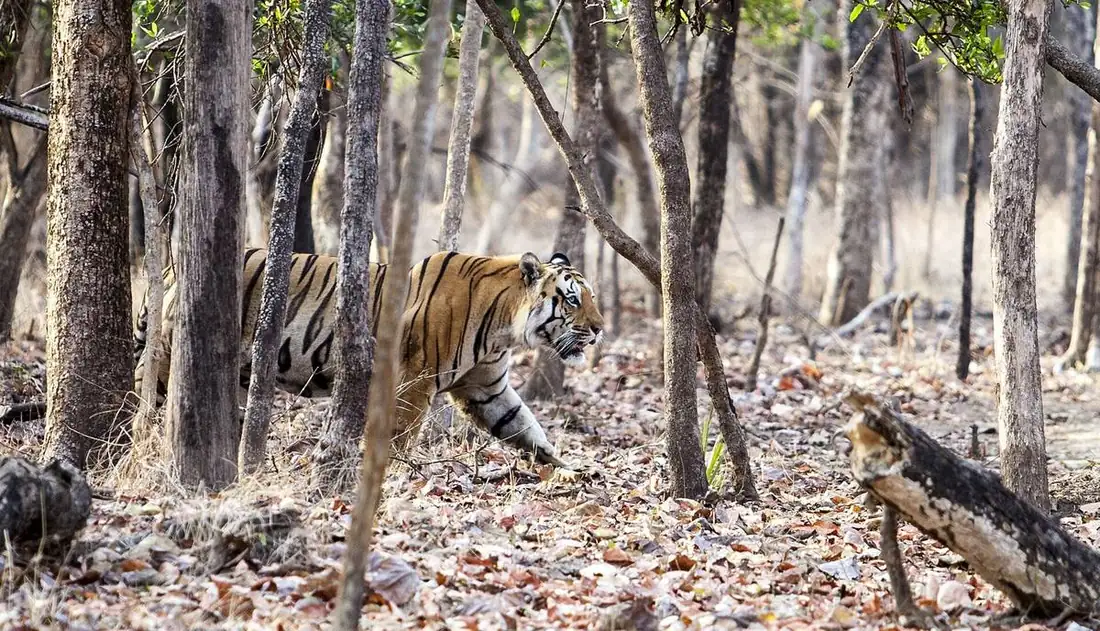
A tiger on a forest track in Ranthambore. Photo: Stephenekka, CC BY-SA 4.0, Wikimedia Commons.
Sold out online? Ask us. We book from the daily current and tatkal quotas, and you pay only after we confirm availability, with a full refund if the permit can’t be issued.
Check my date on WhatsAppWinter is when Ranthambore looks its classic best. The monsoon grass has dried to gold, the lakes are still full, and the forest opens up week by week as leaves fall.
We never promise a tiger. No one honestly can. For the season-wide view, including when sightings peak in April and May, see the best time to visit Ranthambore. For the tigers you might meet, see famous tigers of Ranthambore.
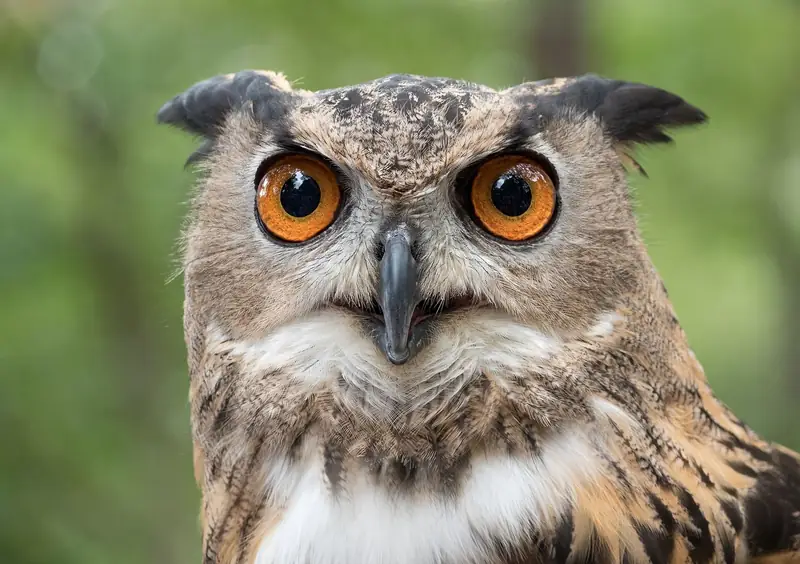
Winter brings migratory birds to the park's lakes. Photo: Rhododendrites, CC BY-SA 4.0, Wikimedia Commons.
Ranthambore itself is usually clear and dry in winter, with some mist over the lakes at dawn. The problem is getting here. From late December to January, dense fog across the plains of north India regularly delays trains from Delhi, sometimes by several hours, and slows the roads early in the morning.
Routes, distances and trains are on how to reach Ranthambore, and a full two-day plan from the capital is in our Ranthambore weekend from Delhi guide.
Winter is peak season, so seats are the constraint, not hotels (except over Christmas and New Year, when both run out). Advance-quota seats are sold out on most dates until 31 January 2027, and advance seats for February and March opened on 1 November. For dates before February, we book you from the later releases:
| Seat | Opens | From (Indian) | From (foreign) |
|---|---|---|---|
| Canter seat, current quota | 10 am, the day before | ₹2,200 per person | ₹4,500 |
| Premium canter seat | 3 days before | ₹3,200 per person | ₹5,500 |
| Shared gypsy seat, premium quota | 3 days before | ₹5,500 per person | ₹8,000 |
| Whole gypsy on tatkal, up to 6 | 11 am, 7 days before | ₹36,000 per vehicle | ₹50,000 |
| Advance quota, February–March | Open now | Canter ₹1,700, gypsy seat ₹2,500 | ₹3,500 / ₹4,000 |
Prices are for zones 6–10; core zones 1–5 cost more. All prices include the permit, vehicle and guide. Diwali week (5–15 November) and 20 December–2 January have higher festive prices. Full grid on Ranthambore safari price. For the holiday fortnight see Christmas and New Year at Ranthambore.
If the permit can't be issued, you get a full refund. The one exception is tatkal, which is non-refundable once issued, by the Forest Department's rule. Weekends from November to February sell out first; weekdays are noticeably easier.
November is mild and dry: typically about 13°C at dawn and up to 30°C in the afternoon in Sawai Madhopur. The morning safari needs a light jacket; the afternoon is warm and sunny. It is one of the most comfortable months to visit.
Typical ranges are about 8–25°C in December and 7–23°C in January, with cold spells bringing dawn close to 3–5°C. In an open safari vehicle at 7 am it feels colder still, so a warm jacket, cap and gloves are essential for the morning drive.
Layers: a thermal inner, a fleece, a warm windproof jacket, a woollen cap, gloves, a scarf for the dust and closed shoes, in green, brown or khaki. Take layers off as the sun warms up after about 9:30 am.
From 1 November to 31 January the morning drive runs about 7:00 to 10:30 am and the afternoon about 2:00 to 5:30 pm. In February and March it is about 6:30 to 10:00 am and 2:30 to 6:00 pm. The exact time is printed on the permit.
Yes, tigers are seen throughout winter, and cold mornings often bring them onto open ground to sit in the sun. Sightings get steadily easier from February as the forest dries, and peak in April and May. No one can promise a sighting.
The morning is colder but misty and atmospheric, good for photographers and birders. The afternoon is warm and comfortable, better for children and older travellers. Over a season the chance of a tiger is similar; with two drives, take one of each.
Send your date, shift and number of guests. We check the live seats, tell you the all-in price and book in your name. Reply in minutes, 7 am to 10 pm.
Or book a canter seat online on our Ranthambore safari booking page
 RANTHAMBORE