The Lady of the Lakes, the crocodile fight, eleven cubs and a family that still rules Ranthambore's lakes.
Ranthambore Tiger books safari permits in your name — we are not the Rajasthan Forest Department and not the official park booking website.
Reply in 2 min · 7am–10pm · pay only after we confirm
Phone optional here · we reply by email, usually within the hour (7am–10pm)
Short answer: Machli (T-16) was a wild tigress who ruled the lakes of Ranthambore from about 1999 until her old age, and is widely called the most photographed tiger in the world. Born in the monsoon of 1997, she was famous for killing a large mugger crocodile, raised around eleven cubs whose descendants still hold the park’s core, and died on 18 August 2016, aged about 19. Her great-granddaughter Riddhi (T-124) holds much of the same lake country today.
Last checked 2 November 2026. Dates come from published accounts of her life (Wikipedia’s sourced biography, naturalist Dicky Singh’s timeline, National Geographic, Down To Earth and ETV Bharat). Where accounts differ, we say so.
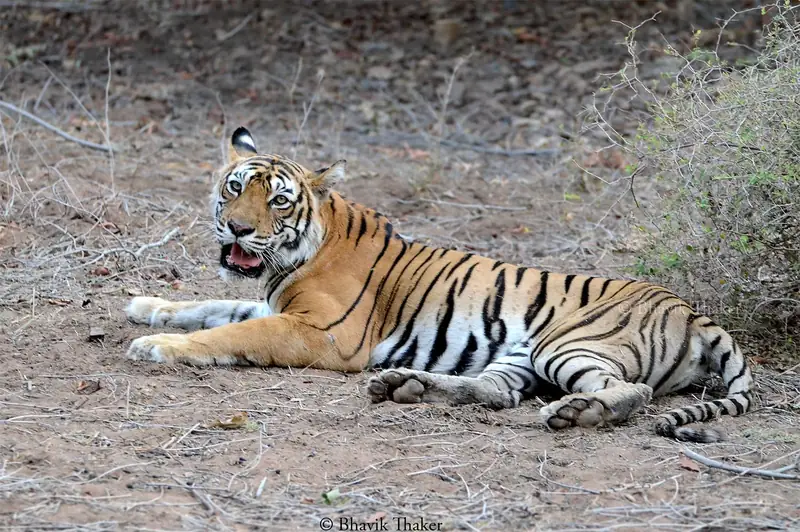
Machli (T-16) in Ranthambore. Photo: bhavik Thaker, CC BY 2.0, Wikimedia Commons.
| Forest department code | T-16 |
| Name | Machli (also written Machali, Machhli), Hindi for “fish”, after a fish-shaped marking on the face. Her mother, an earlier tigress of the lakes, was known by the same name |
| Other names | Lady of the Lakes, Queen of Ranthambore, Crocodile Killer, Queen Mother of Tigers |
| Born | Monsoon 1997 (some accounts say 1996), one of three female cubs |
| Territory | The lakes below Ranthambore Fort: Padam Talao, Rajbagh Talao and Malik Talao, today’s zones 3 and 4 |
| Cubs | Four litters between 2000 and 2006 in the most detailed timeline (some accounts count five), about eleven cubs in all |
| Famous for | Killing a large mugger crocodile; raising her cubs in full view of visitors; a lineage that dominates Ranthambore |
| Honours | Lifetime Achievement Award from Travel Operators for Tigers (reported 2009); commemorative postal cover and stamp (2013) |
| Died | 18 August 2016, aged about 19, cremated with Hindu rites |
Machli was born in the monsoon of 1997, one of three female cubs of the tigress who held the lake area before her. By 1999 she had matured and taken over part of her mother’s territory around the lakes, while her two sisters, later coded T-14 and T-15, moved off to other parts of the forest.
The ground she won was the most spectacular in Ranthambore. Padam Talao, the largest lake, sits below the walls of the 10th-century fort, with the old Jogi Mahal hunting lodge and its enormous banyan tree on the shore. Rajbagh Talao has ruined pavilions standing in the water. Malik Talao is the smallest of the three, a favourite of crocodiles and birds. Tigers hunting sambar in the shallows, against a backdrop of ruins, became the image of Ranthambore, and for most of those years the tiger in the picture was Machli.
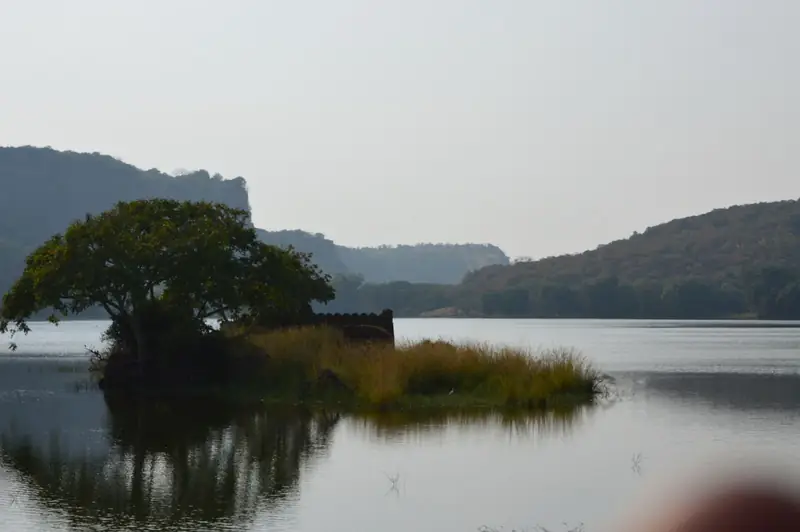
Padam Talao, the heart of Machli’s territory. Photo: Subhayan Bhattacharyya, CC BY-SA 4.0, Wikimedia Commons.
What set her apart was not only where she lived but how she lived there. She hunted, fought and raised cubs in daylight, in the open, often beside the tracks. Guides and photographers could follow her life almost day by day, and visitors from around the world came to see her. That is why she is so often described as the most photographed tiger, or tigress, in the world.
Got a date in mind? Send it on WhatsApp. We check live seats and reply in minutes, 7am–10pm.
Check my date on WhatsAppThe story that made Machli a legend is her fight with a mugger crocodile at one of the lakes. By the most widely cited account it happened in 2003; some later retellings date it to 2008 or 2009, probably because the video spread online years after the event. Reports put the crocodile at around 14 feet (about 4.3 metres), and Down To Earth described it as twice her size.
Mugger crocodiles are dangerous prey for a tiger: heavy, armoured and with a crushing bite. Machli won, and the fight, witnessed by visitors and later watched by millions online, fixed her reputation as the “Crocodile Killer”. Accounts say she lost canine teeth in fights like this one; by 2005, according to naturalist Dicky Singh’s timeline, she had already lost three of her four canines and was still hunting and raising cubs.
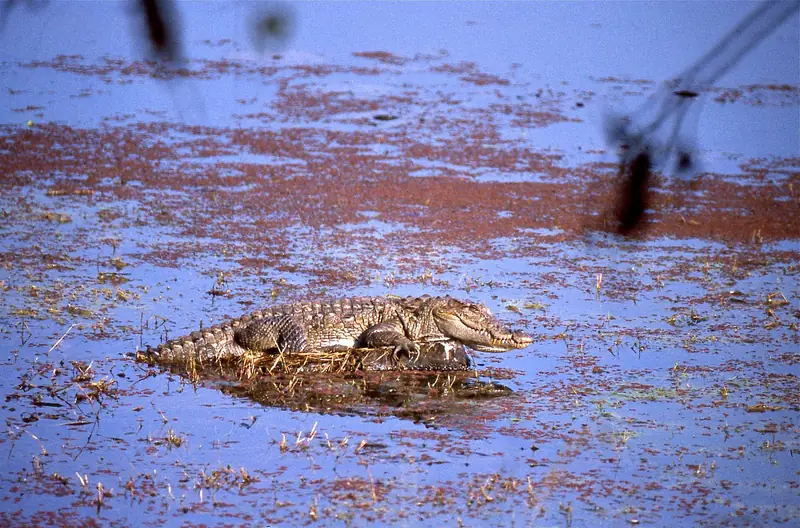
Mugger crocodiles still bask on the shores of Machli’s lakes. Photo: Bernard DUPONT, CC BY-SA 2.0, Wikimedia Commons.
The most detailed record of her family is the timeline kept by Ranthambore naturalist Dicky Singh. Other accounts differ on a few names and on whether there were four or five litters, but the shape of the story is the same.
| Litter | Cubs | What became of them |
|---|---|---|
| 2000 (father: Bamboo Ram) | Two males: Broken Tail and Slant Ear | Slant Ear disappeared after leaving her. Broken Tail wandered out of the park and was killed by a train near Kota in 2003, a story later told in a BBC Natural World film |
| 2002 (father: Nick Ear) | Three cubs, two survived: Jhumroo (male) and Jhumree (female) | Jhumroo later settled in the Lahpur valley; Jhumree was pushed out and not seen again |
| 2005 | Two: Bahadur (T-3, male) and Sharmelee (T-1, female) | Bahadur set up his own territory. Sharmelee was moved to Sariska as ST-2, one of the first tigers taken there in 2008 |
| 2006 (monsoon) | Three females: T-17 (Sundari, “Satra”), T-18 (“Athara”) and T-19 (Krishna, “Unnis”) | Sundari took over the lakes; T-18 was moved to Sariska as ST-3; Krishna stayed and became the next great tigress of the lakes |
The nicknames of the last litter are simply the numbers 17, 18 and 19 in Hindi: Satra, Athara and Unnis.
Sariska Tiger Reserve, near Alwar, lost every one of its tigers to poaching by 2004–05. When India decided to bring tigers back, Ranthambore supplied them. From June 2008, tigers were airlifted from Ranthambore to Sariska, and two of the first tigresses, ST-2 and ST-3, were Machli’s daughters. Sariska had 56 tigers at Rajasthan’s July 2026 count, and Machli’s line is part of that recovery.
Sold out online? Ask us. We book from the daily current and tatkal quotas, and you pay only after we confirm availability, with a full refund if the permit can’t be issued.
Check my date on WhatsAppThe extraordinary thing about Machli’s family is how long it has held the same ground. Her daughters, granddaughter and great-granddaughter have ruled the lakes, one after another, for more than a quarter of a century.
| Generation | Tigress | Her story |
|---|---|---|
| 1 | Machli (T-16) | Born 1997, held the lakes from about 1999, died 18 August 2016 |
| 2 | Krishna (T-19) | Born 2006 in Machli’s last litter; took over the lakes after her sister Sundari |
| 3 | Arrowhead (T-84) | Krishna’s daughter, born 2014, fathered by the male T-28, “Star Male”. One of the most photographed tigresses of her generation. Died on 19 June 2025 after a long illness (a brain tumour, reported ETV Bharat) |
| 4 | Riddhi (T-124) | Arrowhead’s daughter, born 2019 with her sister Siddhi (T-125). Has held the lake country in recent seasons |
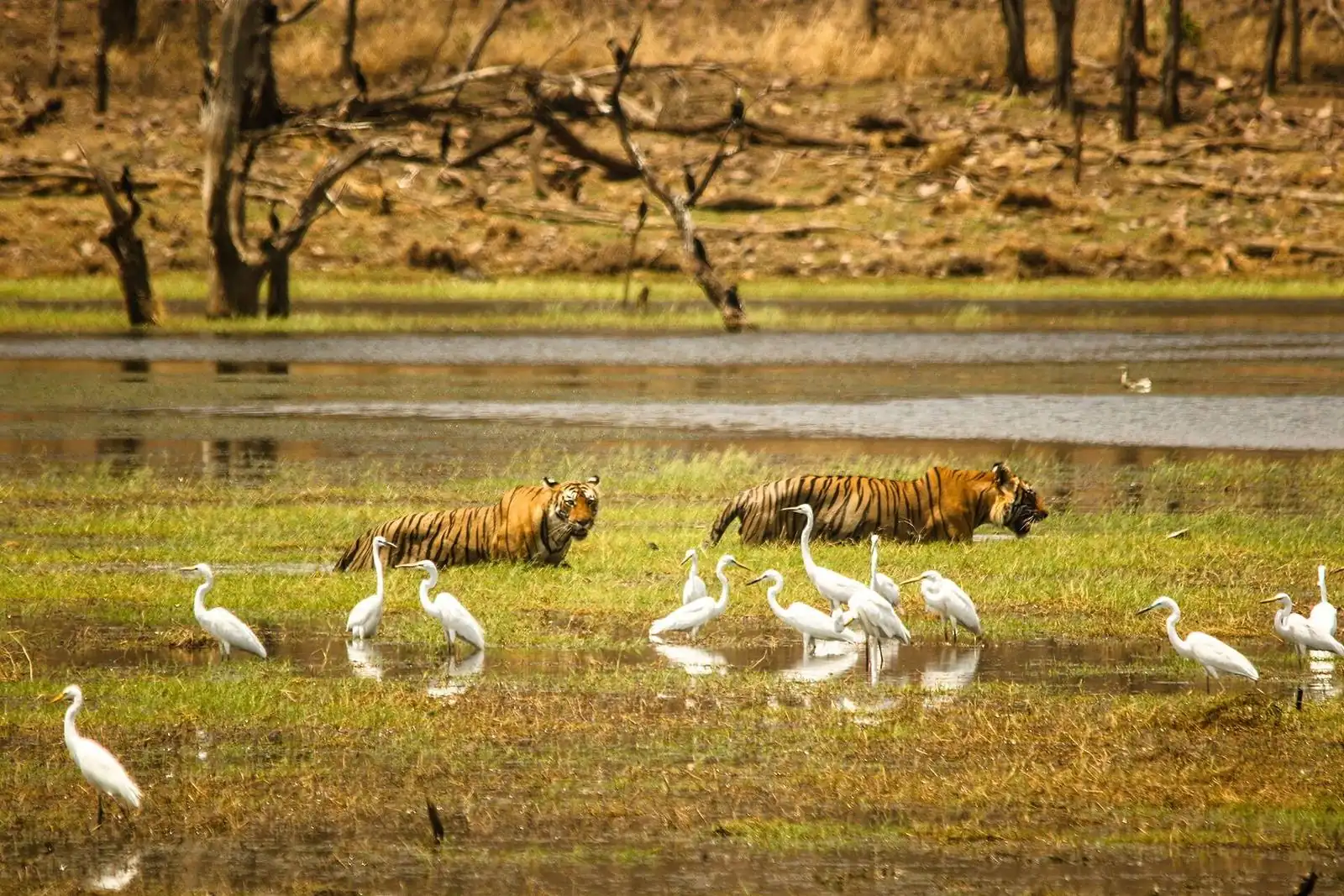
Arrowhead (T-84), Machli’s granddaughter, with the male T-87 at a lake in 2017. Photo: Zahirabbaswikiindia, CC BY-SA 4.0, Wikimedia Commons.
Not every branch ended happily. Arrowhead’s last litter of three was moved out of Ranthambore after people were killed in the area, a reminder of how closely villages and tigers live around the reserve. For the other well-known tigers of the park, including Ustad (T-24) and Noor (T-39), see the famous tigers of Ranthambore and their family tree.
Machli’s life ran through the years that turned Ranthambore from a small park into one of the most visited wildlife destinations in India, and she became the face of that change.
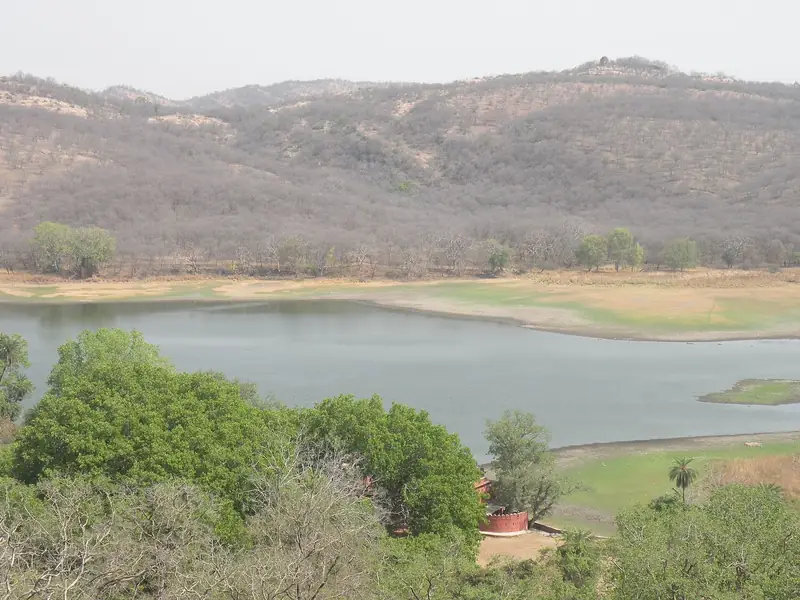
Jogi Mahal and its banyan at Padam Talao. Photo: A. J. T. Johnsingh, WWF-India and NCF, CC BY-SA 4.0, Wikimedia Commons.
Few wild tigers live past 15. Machli lived to about 19, and her last years were watched as closely as her prime. In early 2014 she disappeared from her usual area and more than 200 forest staff searched for her; she was found about a month later, alive and hunting in dense forest.
By then she had lost almost all her teeth and the sight in one eye, and her daughter Sundari had pushed her out of the lakes. The Forest Department began to tie out live bait where she fed, and watched to make sure she ate. It was a popular decision with the public and a criticised one among scientists: tiger biologist K. Ullas Karanth argued that feeding a wild tiger kept her alive past the point nature would have allowed. The debate over how far to protect a famous animal is still part of her story.
Machli fell seriously ill in August 2016 and died on 18 August 2016. Forest guards stood to attention as she was cremated with Hindu rites, in a public ceremony few wild animals have ever been given.
You can still drive through the country she ruled. Her lakes are on the routes of zones 3 and 4: Padam Talao, Rajbagh and Jogi Mahal in zone 3, Malik Talao and Lakarda in zone 4. They are the most requested zones in the park and the hardest seats to get.
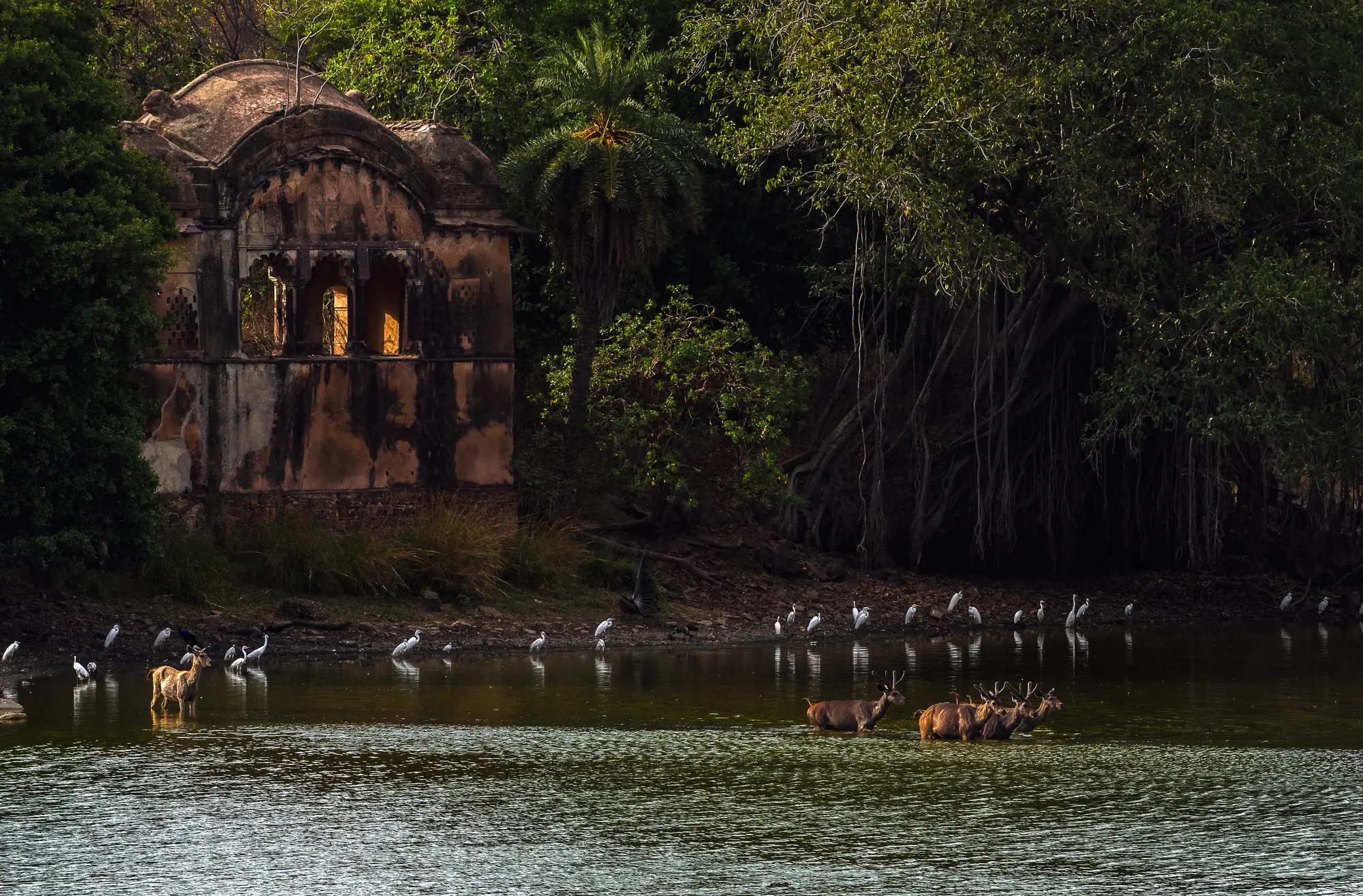
The ruins at Rajbagh, where Machli hunted in the shallows. Photo: Gowri Subramanya, CC BY-SA 4.0, Wikimedia Commons.
Want to drive Machli’s lakes? Send your date on WhatsApp and we tell you what is open for zones 2, 3 and 4, or see Ranthambore safari booking for this week’s seat status.
Machli (T-16) was a wild Bengal tigress in Ranthambore National Park, Rajasthan, born in the monsoon of 1997. She held the lake territory below Ranthambore Fort for most of her life, became famous for killing a large mugger crocodile, raised around eleven cubs and is widely called the most photographed tiger in the world. She died on 18 August 2016, aged about 19.
Machli means “fish” in Hindi. The name is explained by a fish-shaped marking on the side of her face; her mother, who held the lakes before her, was known by the same name.
By the most widely cited account in 2003, at one of the lakes in her territory; some later retellings date it to 2008 or 2009. The crocodile was reported to be about 14 feet long. She killed it, and the fight earned her the name Crocodile Killer.
Of old age. She died on 18 August 2016, aged about 19, well beyond the usual lifespan of a wild tiger. In her last years she had lost almost all her teeth and the sight in one eye, and the Forest Department fed her with bait. She was cremated with Hindu rites in a public ceremony.
Yes. Her daughter Krishna (T-19) took over the lakes, Krishna’s daughter Arrowhead (T-84) held them until her death on 19 June 2025, and Arrowhead’s daughter Riddhi (T-124) has held the lake country in recent seasons. Two of Machli’s daughters were also moved to Sariska from 2008 to help bring tigers back there.
The lakes below Ranthambore Fort, which are now on the routes of zones 3 and 4: Padam Talao, Rajbagh and Jogi Mahal in zone 3, and Malik Talao and Lakarda in zone 4. Zones are allotted by the Forest Department; on short-notice seats you can pay more to choose zone 2, 3 or 4.
Send us your date, shift and group size. We check live seats for zones 2, 3 and 4 and the rest of the park, and reply within minutes, 7 am to 10 pm IST. We confirm availability before you pay, and if a permit can’t be issued you get a full refund (tatkal is non-refundable once issued).
 RANTHAMBORE