Sawai Madhopur tourist places beyond the safari, with distances from town, timings, and one-day and two-day plans, from someone who grew up here.
Ranthambore Tiger books safari permits in your name — we are not the Rajasthan Forest Department and not the official park booking website.
Reply in 2 min · 7am–10pm · pay only after we confirm
Phone optional here · we reply by email, usually within the hour (7am–10pm)
Short answer: the best places to visit in Sawai Madhopur are inside or next to the tiger reserve: a Ranthambore safari, and Ranthambore Fort with the Trinetra Ganesh temple on top. Close to town are the painted railway station, the Chamatkarji Jain temple, the Dastkar craft centre and the Ranthambhore School of Art. For a half-day trip, take the Chambal boat safari at Palighat for gharials, or visit Chauth Mata temple at Chauth ka Barwara. Two days covers all of it at an easy pace.
Written by Dr. Mahin Ateek, founder of Ranthambore Tiger, who was born and grew up in Sawai Madhopur. Last checked 2 November 2026. Distances are approximate road distances from Sawai Madhopur town; temple timings change with seasons and festivals, so confirm locally on the day.
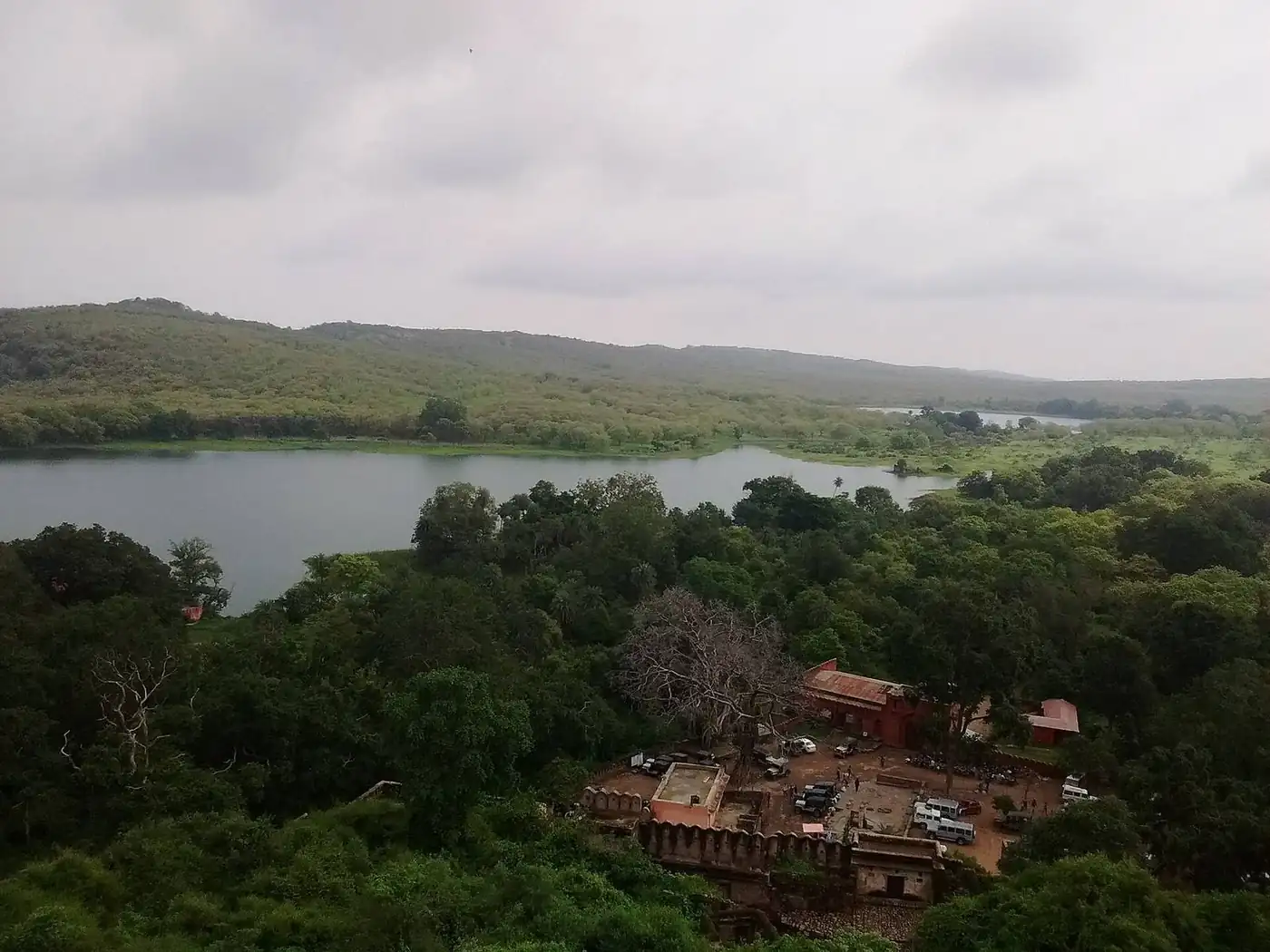
Ranthambore Fort rises above the lakes and forest of the tiger reserve. Photo: Vijay Singh, CC BY-SA 4.0, Wikimedia Commons.
Most people know Sawai Madhopur only as the station where they get off for a tiger safari. I grew up here, and the town has more to offer than one long drive to the park gate. There is a thousand-year-old fort with a temple that receives wedding invitations by post. There is a railway station painted with tigers. There is a river with crocodiles an hour away, and the best guavas in Rajasthan in winter. This guide lists what is worth your time, how far each place is, and how to fit it around your safari shifts.
| Place | Distance from town | Best for | Time needed |
|---|---|---|---|
| Ranthambore National Park safari | 10–13 km to the gates | Tigers, leopards, sloth bears, birds | About 3½ hours per shift |
| Ranthambore Fort and Trinetra Ganesh temple | About 13 km | History, views, pilgrimage | 2–3 hours |
| Sawai Madhopur railway station murals | In town | Wildlife art, a quick photo stop | 20–30 minutes |
| Chamatkarji Jain temple, Alanpur | About 3 km, on the town–station road | A calm, decorated Digambar Jain temple | 30–45 minutes |
| Dastkar Ranthambore craft centre | On Ranthambore Road | Hand block prints, bandhani, textiles | 45 minutes |
| Ranthambhore School of Art | On Ranthambore Road | Wildlife paintings by local artists | 30–45 minutes |
| Amareshwar Mahadev temple | About 6–7 km, off Ranthambore Road | A forest Shiva temple, monsoon waterfall | 1 hour |
| Surwal lake | Roughly 10–15 km | Winter birds | 1–2 hours, early morning |
| Chambal boat safari, Palighat | About an hour's drive | Gharials, crocodiles, river birds | Half a day |
| Chauth Mata temple, Chauth ka Barwara | About 25 km | Pilgrimage, hilltop views | 2–3 hours |
| Khandar Fort | About 40–45 km | A quiet hill fort, few visitors | Half a day |
| Ghushmeshwar temple, Shivad | About 45 km | Shiva pilgrimage | Half a day |
This is the main thing to do in Ranthambore, and everything else fits around it. Safaris run twice a day, morning and afternoon, each about three and a half hours, in a 6-seat open gypsy or a 20-seat open canter. Zones 1 to 5 are the old core with the lakes and the fort views; zones 6 to 10 are quieter and open all year. The Forest Department allocates zones; our zone-by-zone guide explains what each is like.
Canter seats from ₹2,200 per person (Indian nationals) are available on most dates, released at 10 am the day before. Advance seats are sold out on most dates until 31 January 2027, and festive dates (5–15 November and 20 December–2 January) cost more: a canter seat is a flat ₹3,500. The seat status table on our booking page is updated as releases change, and every price is on the price page.
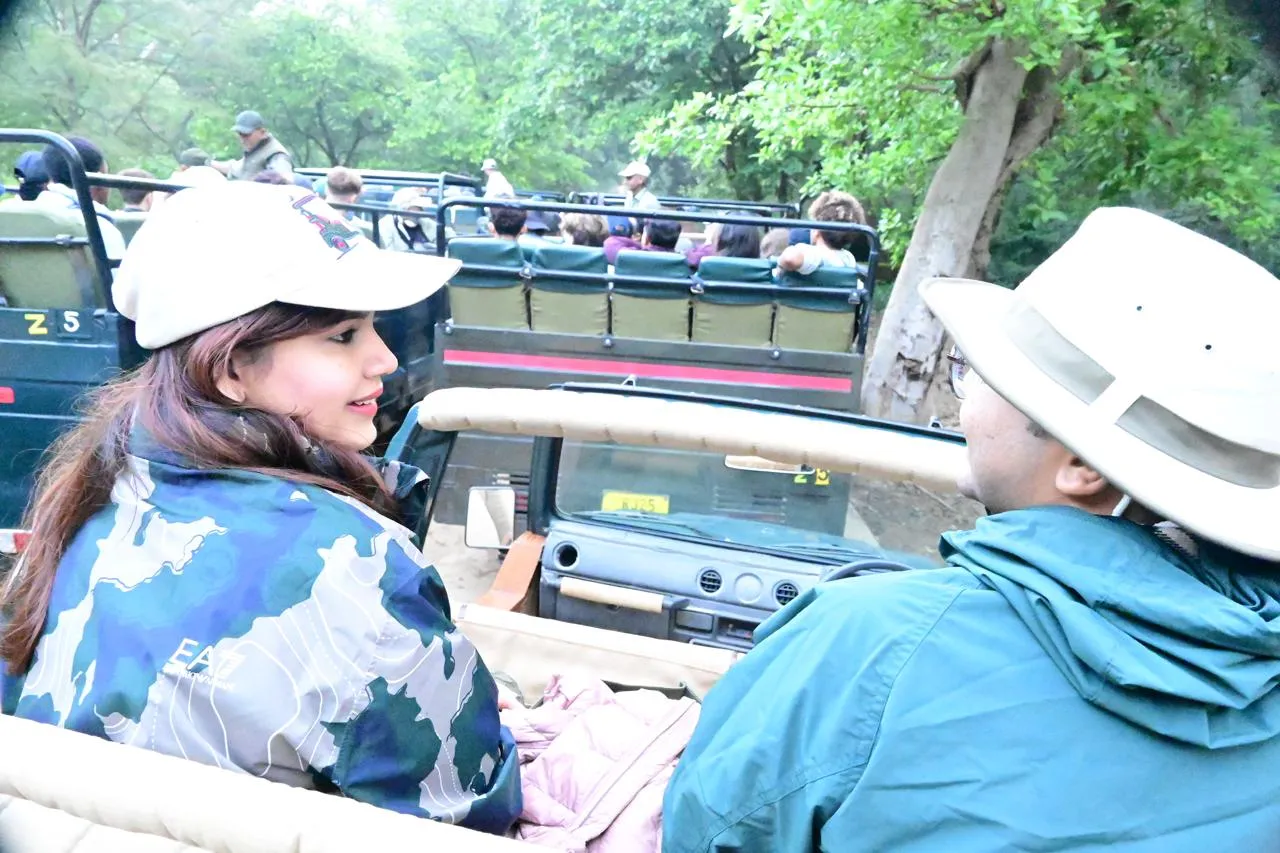
Our guests on a gypsy safari this season.
Ranthambore Fort sits on a hill inside the reserve, about 13 km from town, and has been a UNESCO World Heritage Site since 2013 as one of the Hill Forts of Rajasthan. You do not need a safari permit for it: a public road leads to the fort through the main park gate. The climb from the parking area to the temple is roughly 250 stone steps, about 30–40 minutes at an easy pace, with langurs along the way.
At the top is the Trinetra Ganesh temple, where Ganesh is shown with a third eye. It has a custom found almost nowhere else: families across India post their wedding invitations to this temple, so that the first invitation of every marriage goes to Ganesh. Letters arrive by the sack and are read out to the deity. Footwear comes off at the temple, and non-vegetarian food, alcohol and leather items are not taken inside.
The Ganesh Chaturthi mela. The temple's biggest days are around Ganesh Chaturthi (Bhadrapada Shukla Chaturthi, usually August or September), when a fair of several days brings very large crowds to the fort road. It is a remarkable thing to see, but if you want a quiet climb or an easy safari drive past the fort, plan around it. More on the fort, the climb and what to carry is in our Ranthambore Fort guide.
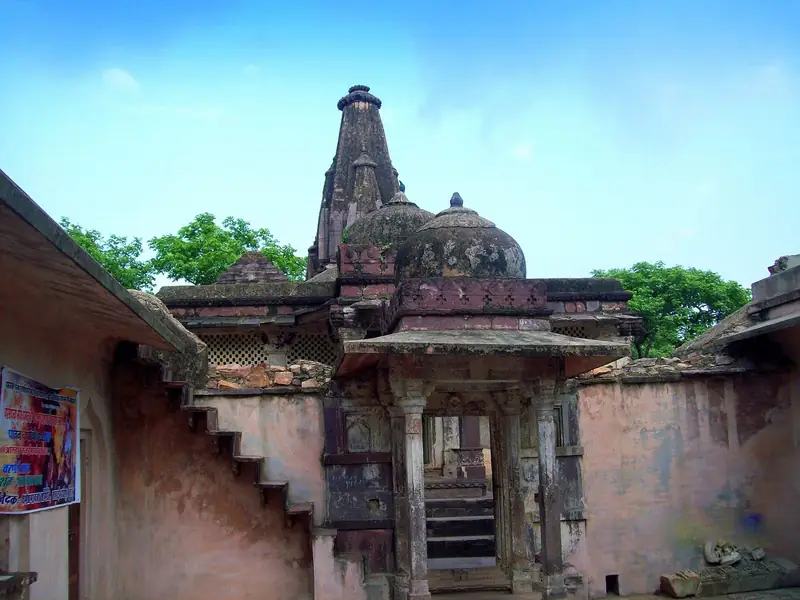
A temple entrance inside Ranthambore Fort. Photo: Anishshah19, public domain, Wikimedia Commons.
The three lakes below the fort are the classic Ranthambore landscape: ruins at the water's edge, sambar deer grazing in the shallows, crocodiles on the banks, and in some years tigers hunting along the shore. Padam Talao and Rajbagh are in zone 3; Malik Talao is in zone 4. You can only see them from a safari vehicle on a permit for those zones, and zones are allotted by the Forest Department, so treat them as a hope, not a plan.
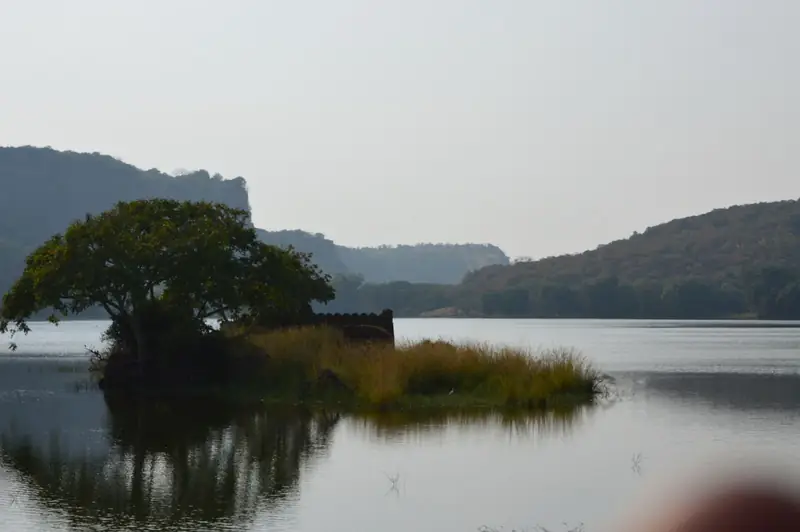
Padam Talao, the largest lake in the park. Photo: Subhayan Bhattacharyya, CC BY-SA 4.0, Wikimedia Commons.
Kachida valley lies in zone 5, a rocky valley of cliffs and dense patches towards the edge of the core. It is a good drive for repeat visitors and patient watchers; leopards and sloth bears are reported here, though tigers are seen less often than around the lakes. Like the lakes, you reach it only on a safari with a zone 5 permit.
Got a date in mind? Send it on WhatsApp. We check live seats and reply in minutes, 7am–10pm.
Check my date on WhatsAppSend it on WhatsApp and we tell you which seats are open for your date, the all-in price, and how to fit the fort or Chambal around your safari. We reply 7 am–10 pm.
Do not rush out of the station. Its walls are covered with paintings of the reserve's tigers, leopards, sloth bears, birds and trees, done by artists of the Ranthambhore School of Art with funding from WWF-India after conservationist Valmik Thapar suggested the idea. The station received a National Tourism Award as the best tourist-friendly railway station for 2014–15. If you arrive by train, take ten minutes on the concourse and platform 1 before you head out.
A Digambar Jain temple dedicated to Rishabhanatha (Adinath), the first Tirthankara, on the main road between the old town and the railway station, about 3 km from the city. Its name comes from the miracles devotees associate with the idol. The complex is walled, with chhatris along the parapet, and the entrance hall is painted floor to ceiling. It is quiet, clean and an easy stop on the way to or from the station. Dress modestly and leave leather outside.
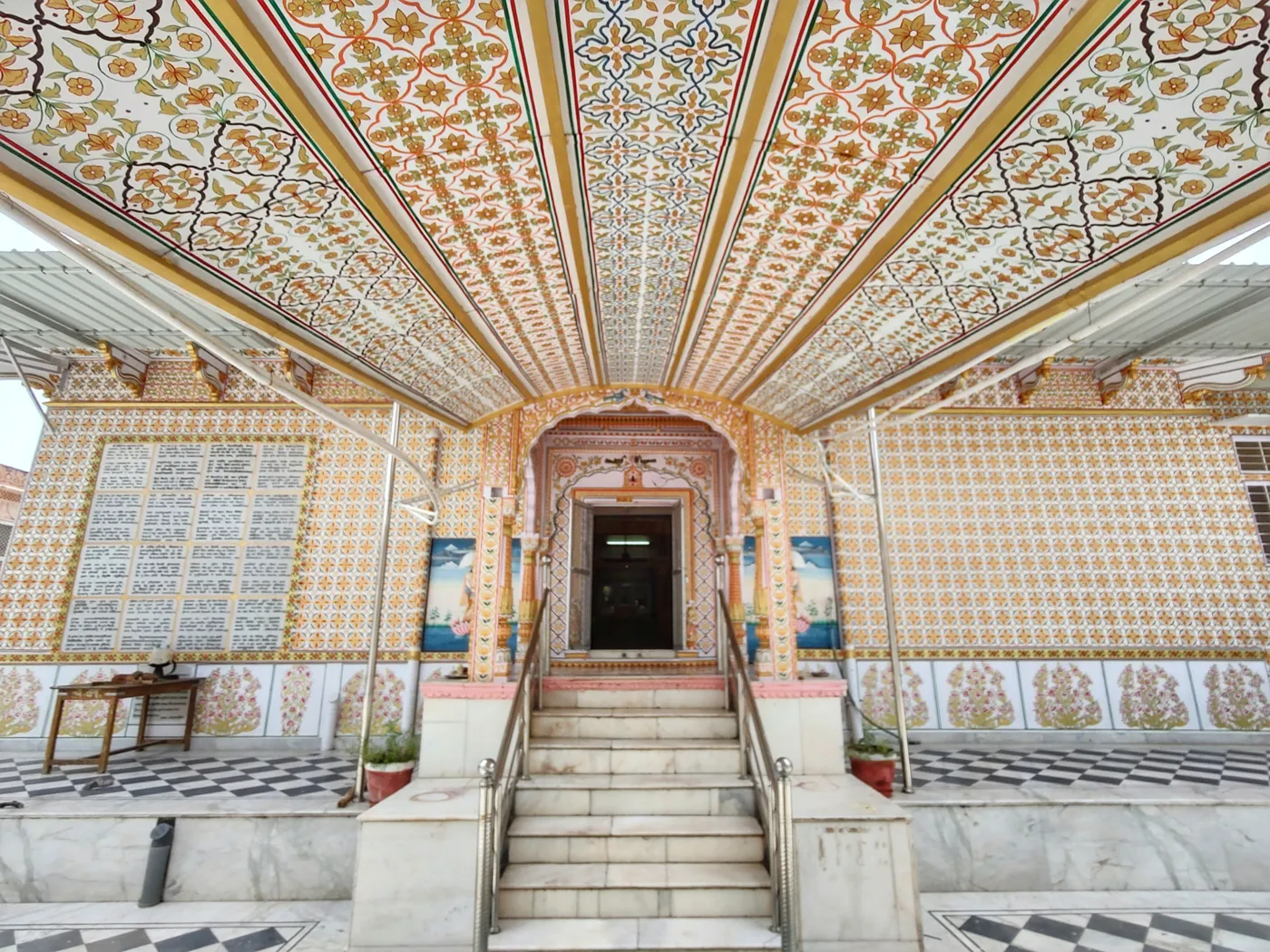
The painted entrance of Chamatkarji. Photo: Pratyk321, CC BY-SA 4.0, Wikimedia Commons.
Dastkar began its Ranthambore project in 1991 to give women in the villages around the reserve an income that did not depend on the forest. Today hundreds of women work in hand block printing, bandhani (tie-dye), embroidery and patchwork, and the centre near Ranthambore Road sells their bedcovers, stoles, bags and clothes. It is the best place in Sawai Madhopur to buy something made here, and the money goes to the women who made it. Check opening hours locally before you go.
A small gallery and studio on Ranthambore Road where local artists paint the wildlife of the reserve, many of them from the same team that painted the railway station. Paintings are for sale in every size, and the artists are usually happy to talk about their work. Listed hours are roughly 10 am to 6 pm; confirm before you go.
A Shiva temple in the hills off Ranthambore Road, about 6–7 km from town, reached on a short forest track and a flight of steps. Most of the year it is a quiet stop on the way back from an afternoon safari. In the monsoon a waterfall runs beside it and the place fills up, especially in the month of Sawan and on Mahashivratri. The track can be rough and slippery after rain.
A shallow seasonal lake outside town, roughly 10 to 15 km by road depending on the route, which in winter fills with water birds: ducks, waders, storks and, in good years, flamingos and pelicans. Come early in the morning between November and February. By summer it usually dries out, so it is not worth the drive then.
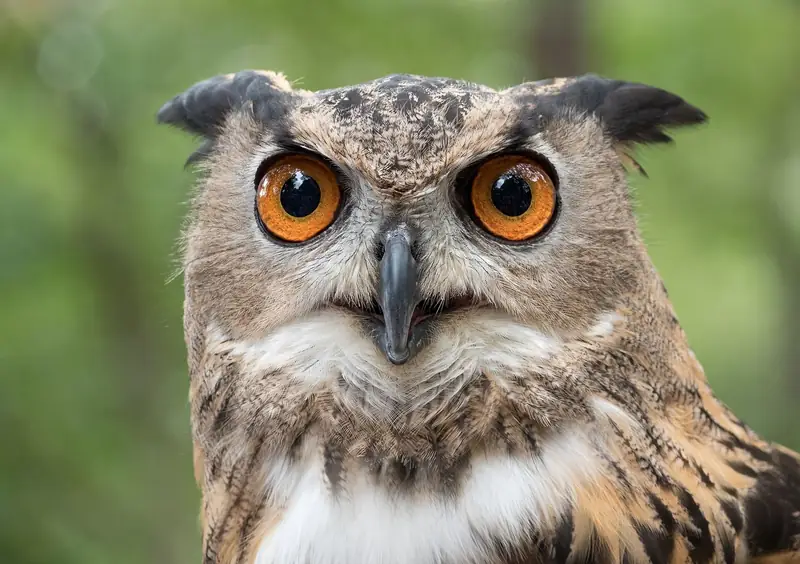
Winter water birds near Ranthambore. Photo: Rhododendrites, CC BY-SA 4.0, Wikimedia Commons.
About an hour's drive from Ranthambore, a motor boat takes you along the Chambal river inside the National Chambal Sanctuary, past sandbanks with basking gharials, mugger crocodiles, turtles and river birds such as Indian skimmers. The boat ride itself takes about an hour to an hour and a half, and the season runs October to June. It costs ₹1,300 per person for Indian nationals and ₹2,500 for foreign nationals with us, and it is the easiest half-day to add between two safari shifts. Details are on our Chambal safari page.
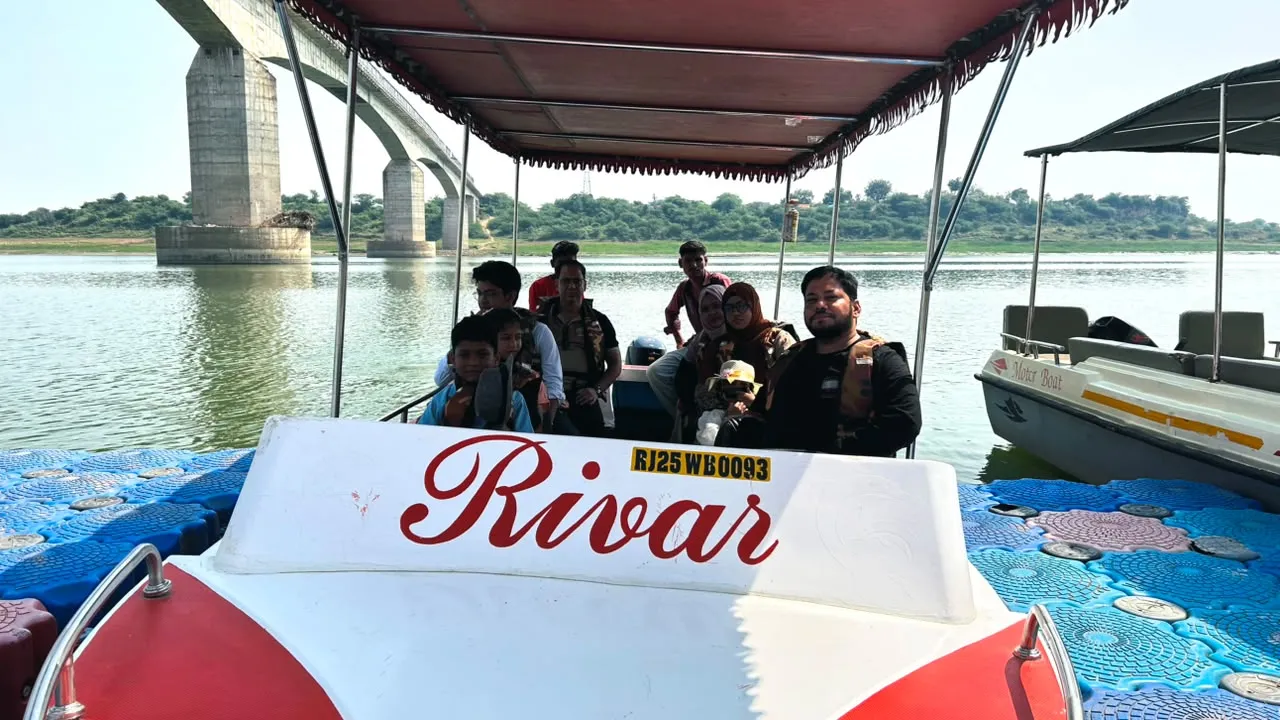
Our own photo from a Chambal boat safari at Palighat.
About 25 km from town, this temple to Chauth Mata stands on a hilltop above the village of Chauth ka Barwara and is reached by roughly 700 steps. It is one of the best-known temples in eastern Rajasthan, and crowds are heaviest on Chauth days, especially around Karva Chauth. Go in the cool of the morning and carry water; the climb is steady but tiring for older visitors.
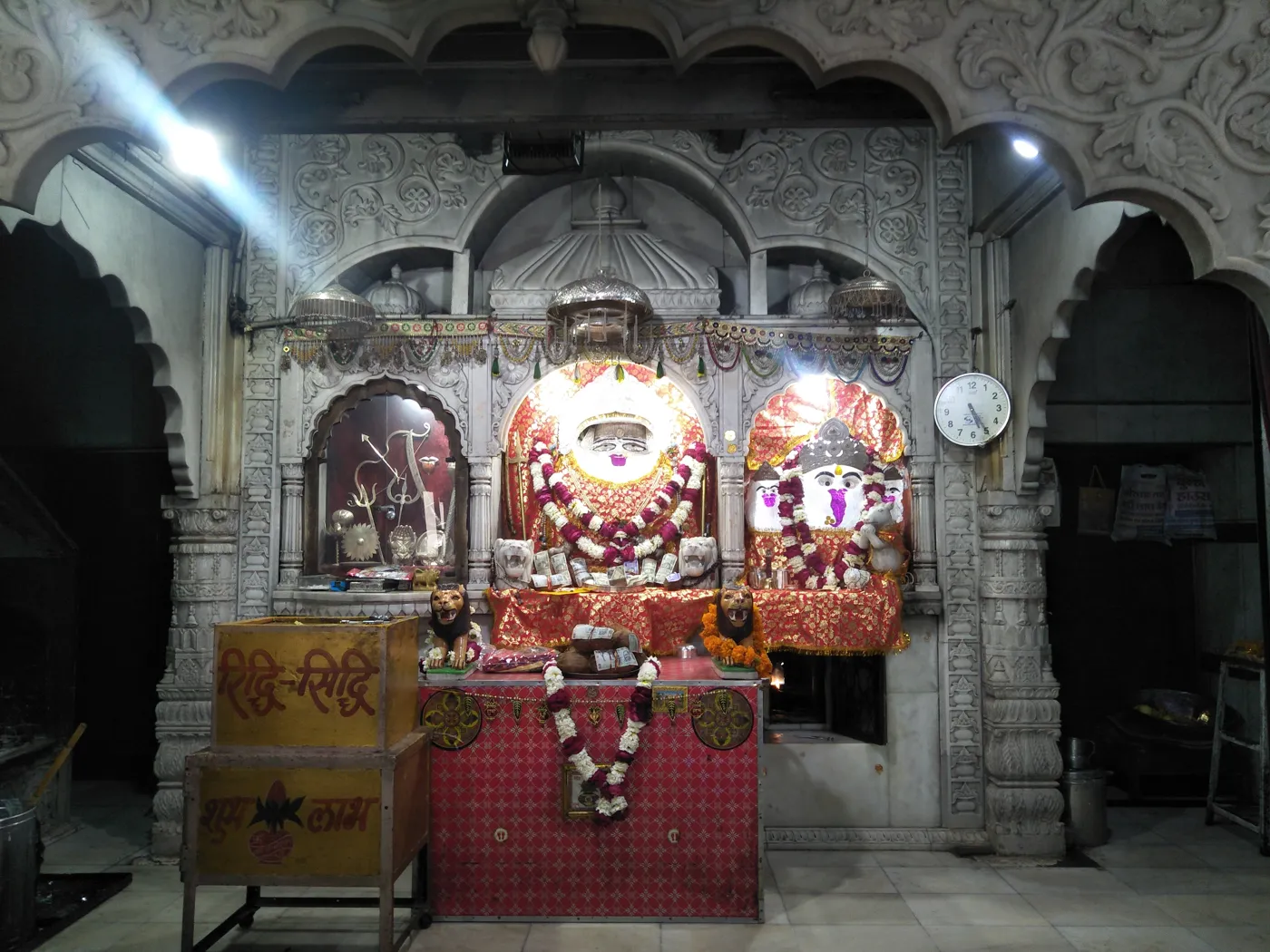
Inside Chauth Mata temple. Photo: कृष्ण कान्त शर्मा, CC BY-SA 4.0, Wikimedia Commons.
A hill fort about 40–45 km from town, at Khandar, on the eastern side of the reserve. It was considered almost impossible to attack and changed hands between several dynasties. Few tourists go, so you may have the walls, gateways, temples and water tanks to yourself. The road is slower than the distance suggests; allow half a day.
A Shiva temple at Shivad (also written Siwar), about 45 km from Sawai Madhopur. Devotees here regard it as the twelfth Jyotirlinga, a status also claimed for Grishneshwar in Maharashtra. It draws large crowds in Sawan and on Mahashivratri; on other days it is a quiet country temple.
Sold out online? Ask us. We book from the daily current and tatkal quotas, and you pay only after we confirm availability, with a full refund if the permit can’t be issued.
Check my date on WhatsAppTigers, the fort, and guavas. Sawai Madhopur district grows most of Rajasthan's guavas. Orchards line the roads outside town, and in winter, roughly November to February, carts all over town sell fresh Madhopur guavas for a few rupees each. Try one with salt and red chilli, the way we eat them here. In January 2026 the town held a guava festival, and the state has announced a guava processing plant for the district.
| What | Details |
|---|---|
| Railway station | Sawai Madhopur Junction (SWM), on the Delhi–Mumbai main line. About 2 hours from Jaipur and 1½–2 hours from Kota by train. See how to reach Ranthambore |
| Nearest airport | Jaipur, about 160–180 km by road, 3–3½ hours |
| Station to the park gates | 10–13 km, 15–20 minutes |
| Getting around | Auto-rickshaws and taxis outside the station; most hotels arrange pickups. Safari vehicles collect you from your hotel |
| Cash and ATMs | Bank ATMs in town and along Ranthambore Road. Carry some cash for temples, shoe stands, guava carts and small shops |
| Markets | The old city bazaar for daily needs and sweets; Ranthambore Road for craft shops and cafés near the hotels |
| Best season | October to March for weather and sightseeing; the core zones are open 1 October to 30 June. Month-by-month guide |
| Where to stay | On Ranthambore Road, between town and the park gate. Where to stay and 41 hotels and resorts |
| When | One day in Sawai Madhopur | Two days (day 2) |
|---|---|---|
| Early morning | Morning safari (about 7–10:30 am from November to January) | Surwal lake for birds (winter) or a second morning safari |
| Late morning | Breakfast, then Ranthambore Fort and the Trinetra Ganesh temple | Drive to Palighat for the Chambal boat safari |
| Afternoon | Lunch and rest; Dastkar and the School of Art on Ranthambore Road | Back for lunch, or Chauth Mata temple on the way |
| Evening | Painted station and Chamatkarji temple if you leave by train | Afternoon safari, then guavas in the bazaar |
If you only have one day, choose either the morning or afternoon safari plus the fort. Two safaris in a day is possible but tiring, and it leaves no time for the town. Exact shift times change by month; see safari timings and zones. For a ready-made trip with hotel, meals and safari, see our stay + safari packages.
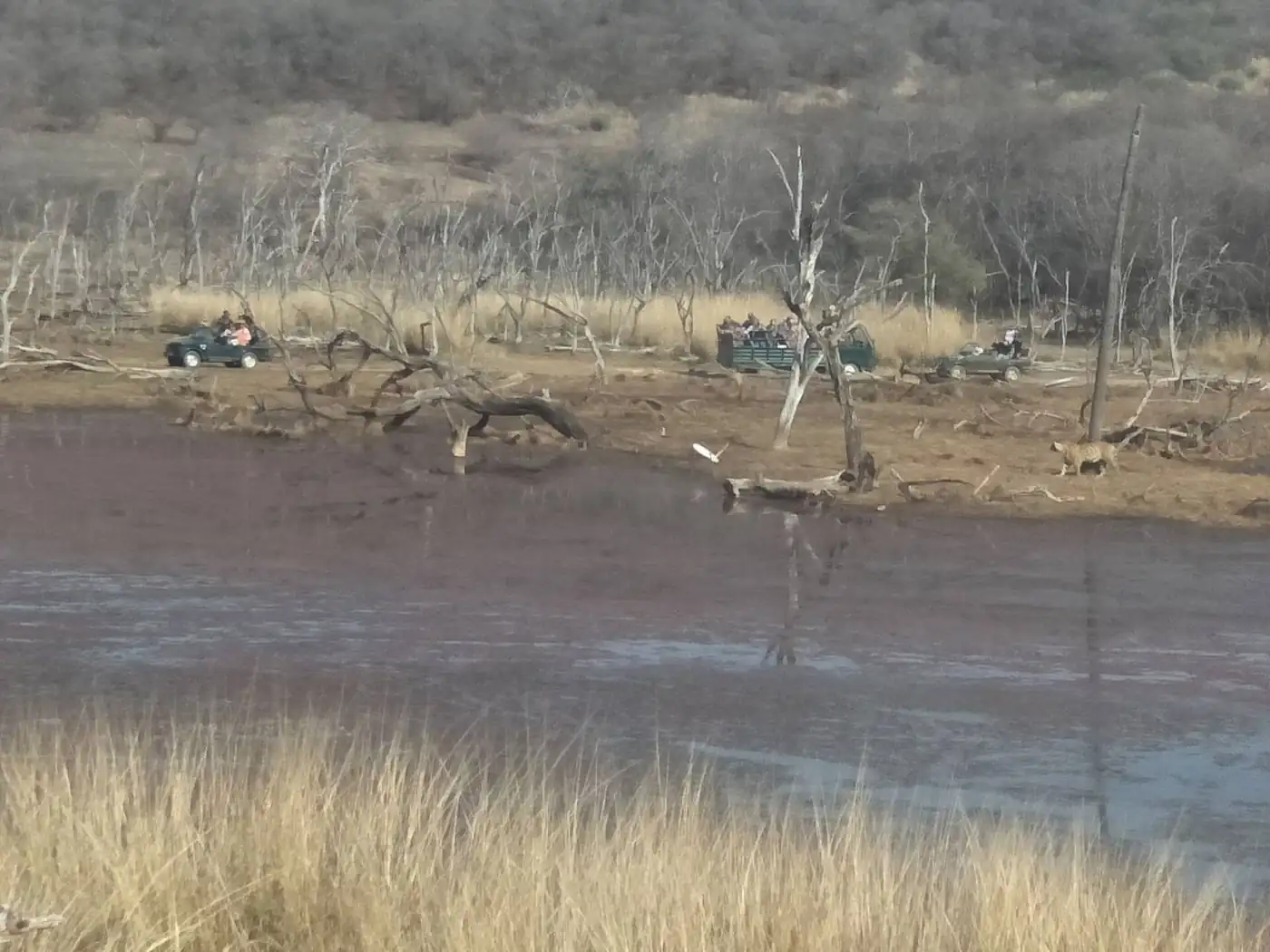
Dry forest and hills inside the reserve. Photo: कृष्ण कान्त शर्मा, CC BY-SA 4.0, Wikimedia Commons.
Ranthambore Tiger is run from Sawai Madhopur. If you are in town and want to talk through a safari or a hotel in person, or just need local advice, you are welcome.
Same-day safari seats go in minutes, so for today's or tomorrow's safari please call rather than message: see safari today or tomorrow.
A safari in Ranthambore National Park and Ranthambore Fort with the Trinetra Ganesh temple come first. In town, see the painted railway station, the Chamatkarji Jain temple, the Dastkar craft centre and the Ranthambhore School of Art. For half-day trips, the Chambal boat safari at Palighat and Chauth Mata temple at Chauth ka Barwara are the most rewarding.
No. Ranthambore Fort and the Trinetra Ganesh temple are reached by a public road through the main park gate and do not need a safari booking. The lakes, Kachida valley and the rest of the park can only be seen on a safari with a Forest Department permit.
The park gates are about 10–13 km from Sawai Madhopur station, 15–20 minutes by road. Most hotels are on Ranthambore Road between the town and the gates, and safari vehicles pick you up from your hotel.
One day is enough for one safari and the fort. Two days lets you add a second safari, the Chambal boat safari and the town sights without rushing, and it gives you two chances at a tiger sighting instead of one.
Sawai Madhopur is famous for Ranthambore National Park and its tigers, for Ranthambore Fort with the Trinetra Ganesh temple that receives wedding invitations by post, and for its guavas: the district grows most of Rajasthan's guava crop, in season from about November to February.
October to March is the most comfortable time for sightseeing, with cool mornings and pleasant days. The core safari zones 1 to 5 are open from 1 October to 30 June; April to June is hot but often good for sightings near water. Festive dates around Diwali and New Year are the busiest and most expensive.
Auto-rickshaws and taxis wait outside Sawai Madhopur Junction, and most hotels arrange pickups if you ask in advance. You do not need a car for the safari, because the gypsy or canter collects you from your hotel. For day trips to Palighat, Chauth ka Barwara or Khandar, hire a taxi for half a day.
The safari is the part that sells out, so book it first and fit the rest around your shift. Our Ranthambore safari booking page has this week's seat status and prices: canter seats from ₹2,200, booked in your name, with a full refund if the permit cannot be issued (tatkal is non-refundable once issued). Or send your date and number of guests and we reply in minutes.
 RANTHAMBORE